The easiest way to reach the Janiculum viewpoint without climbing from Trastevere is to aim directly for Piazzale Giuseppe Garibaldi. Buses 115 and 870 stop at the summit, and taxis can drive to the same piazzale. For Janiculum Hill without stairs, the important trick is to ignore walking directions to the hill itself and use P.le Garibaldi G. as your destination.
The main panorama is beside the Garibaldi monument at the top of the hill. You do not need to climb the long routes from Trastevere, the river, or the Fontana dell’Acqua Paola to reach it. Rome’s official page for the Passeggiata del Gianicolo lists accessible entrances and identifies Piazzale Giuseppe Garibaldi as the main belvedere.
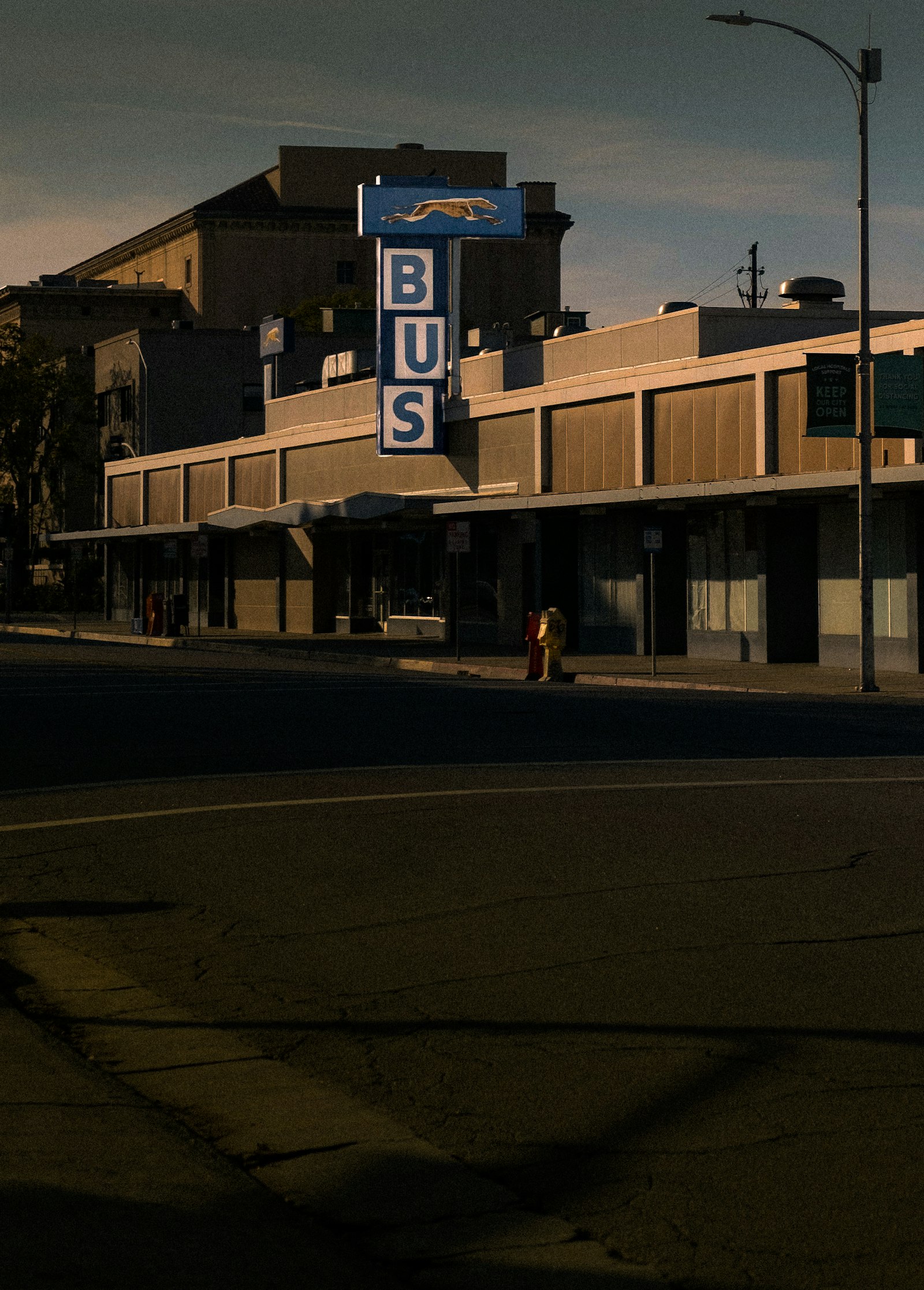
The stop you want is P.le Garibaldi G.
Rome bus displays abbreviate street names heavily. At the Janiculum, the useful abbreviations are:
- P.le = Piazzale, a square or broad open space.
- Psg = Passeggiata, in this case Passeggiata del Gianicolo.
- Fermata = bus stop.
- Capolinea = terminus.
- Direzione = direction.
- Prossima fermata = next stop.
The stop name to watch for is P.le Garibaldi G. Both the 115 and 870 serve it. You will also see stops called Psg Gianicolo/Anita Garibaldi, Psg Gianicolo/Collegio Ucraino, and Psg Gianicolo/Poliambulatorio. Those are nearby, but there is little reason to get off early when avoiding unnecessary walking.
Best bus route from the Vatican and Castel Sant’Angelo
The simplest public-transport approach starts on the river side of the Vatican. Both the 115 and 870 climb from the Paola area toward the Janiculum.
Option 1: board at Paola
The Paola stop is near Via Paola and Ponte Vittorio Emanuele II, a useful boarding point if you are coming from Castel Sant’Angelo, Piazza Navona, or the eastern side of the Vatican area.
From Paola:
- Board bus 115 or 870.
- Stay on as the bus climbs past the Santo Spirito and Bambino Gesù hospital area.
- Watch for Psg Gianicolo/Poliambulatorio, then Psg Gianicolo/Collegio Ucraino, then Psg Gianicolo/Anita Garibaldi.
- Get off at the next stop, P.le Garibaldi G.
The 115 can be confusing because it is a circular service. Its destination display may still refer to Paola, even though it is leaving Paola and climbing the hill before eventually circling back. On the 870, the bus leaving Paola toward the hill normally continues toward Trullo.
Option 2: board at Lgt Sassia/S. Spirito
If you are already near St Peter’s Basilica, you do not need to walk back toward the Paola terminus. Look for Lgt Sassia/S. Spirito (H) on the river near Santo Spirito hospital. Here, Lgt means Lungotevere, and the (H) identifies a hospital stop.
Both 115 and 870 pass this stop before continuing uphill. This is one of the most useful boarding points for travelers who want to remove the steep approach from the visit.
Coming from Trastevere: use the 115 carefully
From central Trastevere, the 115 is usually the most useful direct bus. The catch is that it is circular and passes through parts of the Janiculum route more than once.
Before boarding, check the upcoming stop sequence rather than relying only on the destination display. You want a 115 whose route is heading through Via Garibaldi toward Psg Gianicolo/Villa Corsini and then P.le Garibaldi G.
If the next stops instead take you farther through the lower Trastevere loop, you are on the less useful side of the circular route and may spend much longer on the bus than necessary.
The ATAC journey planner is the best place to check the current stop sequence and live service. Bus diversions are fairly common in Rome because of roadworks, events, hospital access requirements, and temporary traffic changes.
There are two P.le Garibaldi stops, so choose the right one going back
This is the detail that causes the most confusion. The circular road arrangement means there are two stops with the same P.le Garibaldi G. name, serving opposite directions.
If you arrived from Paola on the uphill section, the relevant arrival stop is currently identified in Rome’s transport data as 72865. If you later want to descend toward Paola, Castel Sant’Angelo, or the Vatican, look for the stop on the opposite side of the piazzale, currently identified as 72836.
From that return stop, buses 115 and 870 showing Paola descend past the Janiculum promenade, Bambino Gesù area, Piazza della Rovere, and back toward the river.
Do not simply board the first 115 you see at the top. Because it is circular, a 115 from the wrong stop can take you down through Trastevere and around a substantial loop before returning toward Paola.
How close does the bus get to the panorama?
P.le Garibaldi G. puts you at the summit area around the large equestrian monument to Giuseppe Garibaldi. The panoramic edge of the piazzale is a short distance from the bus stop, without requiring the staircase climb used by pedestrian routes from the lower city.
That does not mean every metre of the Janiculum promenade is perfectly level. Expect ordinary outdoor surfaces, kerbs, patches of uneven pavement, and some sloping ground. Rome’s municipality lists accessible access to the park, but a separate municipal 1.5 km Janiculum urban trekking route is explicitly marked as unsuitable for wheelchair users. Those are different things: getting to the summit viewpoint is much easier than completing the whole hill walk.
Wheelchairs and reduced mobility on buses 115 and 870
ATAC currently states that 100% of its bus fleet has a boarding platform and a dedicated wheelchair area. That makes the bus a realistic option for many wheelchair users.
The weak point can be the stop itself rather than the vehicle. Historic streets do not always provide a perfectly level boarding environment, and parked vehicles or traffic can occasionally make ramp positioning awkward. Travelers who cannot tolerate that uncertainty may find a pre-booked accessible taxi easier.
If you use a wheelchair and need to remain seated in it during a taxi journey, request a taxi con pedana per carrozzina, meaning a taxi with a wheelchair ramp. Do not assume that an ordinary taxi picked up from a rank will have one.
Strollers are easier to manage on the bus outside peak hours, but a taxi is usually the less complicated option with a large stroller, several bags, or a traveler who tires quickly.
Taking a taxi directly to the Janiculum viewpoint
A taxi removes almost all of the route-finding problem. Give the driver the destination as:
“Piazzale Giuseppe Garibaldi, al Gianicolo, al belvedere.”
Adding al belvedere, “to the viewpoint,” matters. Simply saying Gianicolo can refer to a much larger area, including Porta San Pancrazio, the Fontanone, Bambino Gesù hospital, and several streets below the main terrace.
If walking distance is important, you can add:
“Mi può lasciare il più vicino possibile alla terrazza panoramica, senza scale?”
This means, “Can you drop me as close as possible to the panoramic terrace, without stairs?”
The driver may approach from the Vatican side, Via del Gianicolo, or from the Trastevere and Porta San Pancrazio side depending on traffic and current restrictions. There is no advantage in instructing the driver to follow a particular street sequence. Road layouts around the hospital and Passeggiata del Gianicolo have changed in recent years, so the exact approach chosen by a professional driver is more useful than an old turn-by-turn route copied from a travel blog.
Official Rome taxis are white, carry a TAXI sign on the roof and a Roma Capitale licence number, and should use the meter for an ordinary city journey. Rome’s current taxi rules and tariffs are published by Roma Servizi per la Mobilità.
Bus or taxi: which is better?
- Choose the 115 or 870 if you can board a normal city bus comfortably and are starting near the Vatican or river. They deliver you remarkably close to the summit for a standard Rome transport fare.
- Choose a taxi if gradients are a serious problem, you use a walker, you have substantial luggage, you are traveling with a large stroller, or you need control over the exact drop-off point.
- Pre-book an accessible vehicle if you require a wheelchair ramp rather than relying on the next available taxi.
- Use a taxi after dark if live bus departures are sparse. It avoids waiting at a hilltop stop without knowing when the next vehicle will appear.
Buses 115 and 870 use Rome’s normal urban fare system. The current BIT ticket costs €1.50 and is valid for 100 minutes. Validate a paper ticket at the beginning of the journey, or activate your digital ticket as required. With contactless Tap&Go, tap the reader when boarding. For the rest of Rome’s transport options, see our guide to getting around Rome without stress.
Avoid these routes if stairs or steep climbs are the problem
Several perfectly reasonable sightseeing routes become poor choices when mobility is the priority.
Walking up from central Trastevere
Map apps can make the climb from the Trastevere lanes look short. The distance is not the main issue. Via Garibaldi and surrounding approaches climb sharply, and pedestrian shortcuts can introduce steps or awkward surfaces. Take the 115 uphill instead.
Walking from the river near Regina Coeli
This is another route that appears deceptively direct on a map. The Janiculum is immediately above you, but the elevation still has to be gained. Use the nearby Paola or Lgt Sassia/S. Spirito bus stops instead.
Using Fontana dell’Acqua Paola as your destination
The Fontanone is a major Janiculum landmark, but it is not the same place as the main Garibaldi viewpoint. Getting dropped there can leave you with additional sloping walking before reaching Piazzale Giuseppe Garibaldi.
Getting off at Porta San Pancrazio
Porta San Pancrazio is useful for Villa Doria Pamphilj and the upper Trastevere side of the hill, but it is not the most direct drop-off for the classic city panorama. Stay on until P.le Garibaldi G. unless the gate itself is part of your plan.
The noon cannon is below the main terrace
The Janiculum’s cannon fires at noon as a long-standing Roman tradition. The official Rome tourism page places it below the Belvedere del Gianicolo.
If the priority is minimizing gradients as well as eliminating stairs, there is no need to descend to the cannon position. Stay around Piazzale Giuseppe Garibaldi and the upper belvedere. You can enjoy the skyline from the summit without adding a down-and-up detour.
If the hill is one stop in a longer sightseeing day, the Italy on Foot trip planner can help sequence the Vatican, Trastevere, and the rest of your Rome route without accidentally adding another uphill crossing.
What to do if the bus is diverted
Do not start walking uphill just because the 115 or 870 disappears from a stop display. Check the live ATAC route first. A temporary diversion may move a stop, suspend one side of the road, or send the bus around a work zone while still serving the summit from another direction.
Search specifically for P.le Garibaldi G., not merely “Gianicolo.” If neither direct line is serving the piazzale and walking uphill is not an option, switch to a taxi rather than trying to improvise from a lower bus stop.
The same rule applies on Sundays and public holidays. The Janiculum promenade itself is listed by Rome as always accessible, but bus frequencies and temporary traffic arrangements can differ from weekday service. Check the live departure before leaving the river.
The simplest low-effort plan
- From the Vatican or Castel Sant’Angelo area, reach Paola or Lgt Sassia/S. Spirito.
- Take bus 115 or 870 uphill.
- Get off at P.le Garibaldi G., not at one of the earlier Passeggiata del Gianicolo stops.
- Stay around the Garibaldi monument and main panoramic terrace if you want to minimize slopes.
- For the return toward the Vatican, use the opposite P.le Garibaldi G. stop and check that the bus is heading toward Paola.
- If the service is disrupted, it is late, or mobility is very limited, call a taxi to or from Piazzale Giuseppe Garibaldi, al belvedere.