Porta Susa is easier once you stop treating it as one giant basement. The street entrances feed into a long glass station with ramps and cross-passages; all six railway tracks are underground, while Metro M1 continues deeper below. The Torino Porta Susa underground levels are therefore mostly a wayfinding problem: follow Binari for trains, Metropolitana / M1 for the metro, and Uscita plus the street name when you want the surface.
How the levels actually fit together
The station is not a neat stack of identical floors. Its glass hall slopes, ramps connect different heights, and some technical level numbers are more useful to architects than to passengers. That is why you can see references to levels -1, -3, -4 and -5 without ever needing to find a mysterious passenger floor marked -2.
- Level 0: street access and the upper parts of the glass station. This is where you enter from Corso Bolzano or Corso Inghilterra.
- Level -1: the main transverse passages above the railway tracks. These passages, often identified by letters A to D, contain the stairs, escalators and lifts leading down to the individual binari.
- Level -2: appears in technical descriptions as an intermediate part of the station circulation and related facilities. It is not normally a destination a rail passenger needs to select.
- Level -3: the six railway platforms. The metro entrance area also meets the railway station around this level, particularly on the track 1 side.
- Level -4: the metro mezzanine.
- Level -5: the M1 platforms where the driverless metro trains actually arrive.
The useful lesson is simple: do not try to navigate Porta Susa by memorising floor numbers. Passenger signs use destinations such as Binario 2, Metropolitana, Corso Bolzano and Corso Inghilterra.
Where the high-speed trains are
Porta Susa has six passenger tracks, numbered 1 to 6, and all of them are underground. There is no separate high-speed terminal hidden on another basement level.
Tracks 1 and 2 are commonly used by high-speed services, but treat that only as an orientation clue. Platform allocation is operational and can change. Frecciarossa, Italo and international trains should always be matched to the departure screen by train number and destination.
The Italian word to look for is Binario. A departure screen showing Binario 2 means track/platform 2. Check again shortly before boarding rather than walking straight to track 1 or 2 because that is where you expect your train to be. The official RFI Porta Susa page is also useful for current station and accessibility information.
Changing between railway platforms
If your arriving train and departing train use different tracks, go up to one of the transverse passages, cross above the tracks, then take the signed escalator, stairs or lift down to the new platform. Do not walk toward the far end of a platform hoping to find an underground passage between tracks.
Porta Susa is long enough that a tight connection becomes less comfortable if you have a suitcase, stroller or need a lift. When booking separate tickets, leave a sensible buffer rather than assuming that changing from binario 6 to binario 1 is a two-minute platform hop.
How to transfer from a train to Metro M1
The railway-to-metro connection is entirely inside the station. You do not need to walk outside to another metro stop.
- Get off your train and look for signs marked Metropolitana or the red M.
- If you arrive on binario 1, the metro entrance is on essentially the same railway level. Follow the metro signs rather than automatically going up to the cross-passages.
- From binari 2 to 6, go up by escalator, stairs or lift to a transverse passage, cross toward the track 1 side, and continue following Metropolitana.
- At the metro atrium, pass through the GTT ticket gates.
- Continue down through the metro mezzanine to the platform for either Fermi or Bengasi.
For Porta Nuova, use the metro in the Bengasi direction. For destinations west of Porta Susa, including stops toward Collegno, use the Fermi direction.
A normal high-speed rail ticket is not your metro fare. At Porta Susa you can use an appropriate GTT ticket or the dedicated contactless gate. GTT accepts contactless bank cards and supported phone or watch wallets at metro turnstiles; wait for the confirmation before walking through.
Do not walk to XVIII Dicembre by mistake
Porta Susa and XVIII Dicembre are two different M1 stations. Older information sometimes associates Piazza XVIII Dicembre with the railway station because the historic Porta Susa building is there.
If you are already inside the modern railway station and want M1, follow signs for Porta Susa. There is normally no reason to walk outside to XVIII Dicembre just to catch the metro.
Which street exit to use
The railway station runs lengthwise between Corso Bolzano on the city-centre side and Corso Inghilterra on the western side. Choosing the correct side before climbing to street level can save an annoying walk around a very large station.
Corso Bolzano: historic centre and buses
Choose the Corso Bolzano side for the more direct approach toward Piazza XVIII Dicembre, Via Cernaia and Turin’s historic centre. Corso Bolzano is also important for local and longer-distance bus stops around Porta Susa.
Bus tickets and operator instructions may specify something more precise than simply “Porta Susa”, such as Uscita D, Corso Bolzano or the bus station. Follow that wording. A coach labelled as departing from Porta Susa does not necessarily pull up outside whichever station door happens to be nearest you.
Corso Inghilterra: the western side
Use Corso Inghilterra for the western side of the railway station, including the area around the Intesa Sanpaolo tower, the Palagiustizia side and parts of Cit Turin. GTT also identifies a metro/station access on this side when describing connections from the Palagiustizia parking area.
What the A, B, C and D letters mean
The letters identify the transverse station access passages rather than four separate railway halls. As a rough orientation rule, they run along the length of the station, with the A end toward Corso Vittorio Emanuele II and the later letters progressing toward the Piazza XVIII Dicembre end.
If a bus company, meeting point or pickup instruction says Ingresso C or Uscita D, use the letter on the station signs instead of substituting the street exit that seems closest on your phone map.
If Porta Susa is only one transfer in a longer Italian journey, you can organize the rest of your Italy route around the stations and connections rather than planning each train, metro ride and hotel transfer separately.
Luggage, strollers and step-free routes
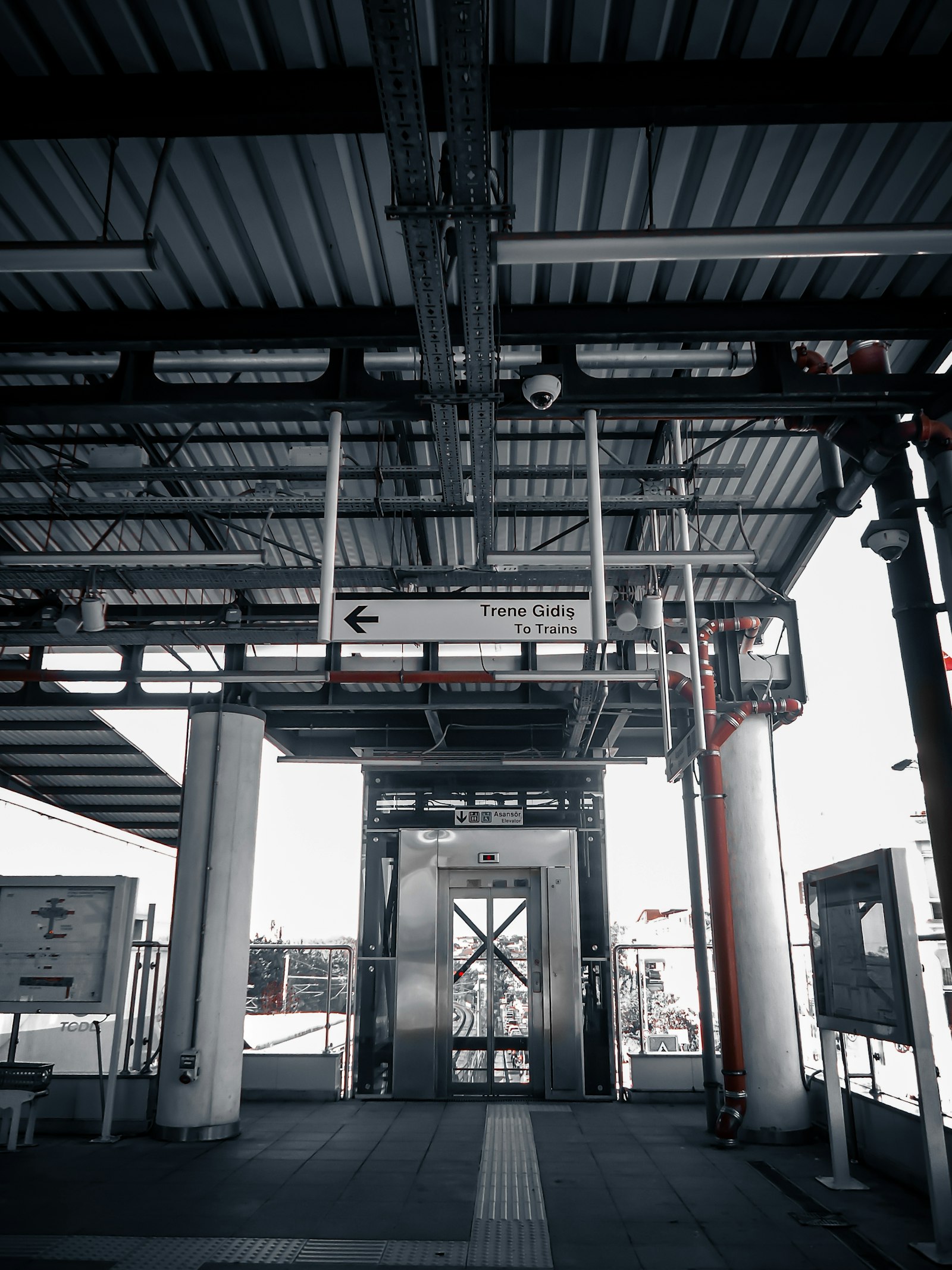
RFI currently lists lift access to all six railway tracks, as well as tactile routes to every passenger platform. Its published operating hours for the railway lifts are 05:00 to 00:00. That detail matters because Porta Susa can have trains scheduled very early in the morning.
If you depend on a lift and have a departure close to or outside those hours, check the RFI accessibility information before travel rather than assuming every lift will be available simply because the station is open.
With a heavy suitcase, use Ascensore / Ascensori signs rather than dragging luggage onto a long escalator unnecessarily. Scale mobili means escalators. The metro is also designed with lifts, but a temporary lift outage can change the workable route, so passengers who require step-free travel should check current GTT information on the day.
Late trains and the metro closing time
Do not assume M1 is running just because long-distance trains are still arriving at Porta Susa. Rail services and the Turin metro keep different operating hours.
Under GTT’s current standard timetable, the first departures from the M1 termini are at 05:30 Monday to Saturday and 07:00 on Sundays and public holidays. Last terminal departures are normally 21:30 Monday to Thursday and on Sundays and holidays, while Friday and Saturday service runs later, with last terminal departures at 01:00. GTT uses the M1S replacement bus during part of the periods when the metro itself is closed. Special events can produce temporary extensions, so check the official GTT metro timetable for your date.
Those times refer to departures from the end stations, not the exact final passage through Porta Susa. If your train reaches Turin close to closing time, check the actual M1 service rather than calculating from the terminal time yourself.
Common Porta Susa mistakes
- Going outside for the metro: M1 has a direct internal connection with the railway station.
- Memorising that high-speed trains use tracks 1 and 2: check the live binario for your actual train.
- Following XVIII Dicembre signs: that is a separate metro station, not the metro interchange you need when already inside modern Porta Susa.
- Ignoring the street name on the exit sign: Corso Bolzano and Corso Inghilterra put you on opposite sides of a large station.
- Treating “Porta Susa” as a precise bus stop: coaches may specify an exit letter, street or autostazione.
- Assuming a rail ticket opens the metro gate: have a valid GTT fare or use the dedicated contactless gate.
- Taking luggage to the wrong platform first: check the departure board before descending from the cross-passage.
If you end up on the wrong level or wrong side
If you descend to the wrong railway platform, return to the cross-passage using the signed stairs, escalator or lift and cross above the tracks. If you reach the wrong street side, it is usually simpler to correct above ground or use one of the public station passages rather than entering the metro system just to get across.
If the metro has already stopped, follow the current GTT instructions for M1S or surface transport instead of walking to XVIII Dicembre in the hope that trains are still running there. And if your departure board changes binario at the last moment, ignore your original mental map and follow the new track number. At Porta Susa, the signs are more useful than the floor numbers.