A private Testaccio food tour works best as a morning or lunchtime walk, combining Mercato Testaccio with traditional bakeries, street food counters and Roman pasta. Allow roughly two and a half to three and a half hours, and choose a departure that gives you enough time inside the market before stalls begin closing. Before paying, confirm how many tastings are included, how much time you will spend at the market and whether the guide is exclusively for your group.
The order of the food stops matters more than you might expect. Starting with a substantial sandwich can leave little appetite for the pasta and regional specialties later. A well-planned route builds from small tastes to a proper lunch, with enough time between stops to understand what you are eating.
What Actually Happens on a Private Food Tour in Testaccio?
Testaccio is one of Rome’s historic food neighbourhoods, shaped by its former slaughterhouse, working-class restaurants and local market. Its food traditions range from simple bread and pizza to slow-cooked meat dishes and the classic Roman pastas.
Most guided experiences combine several types of stops:
- Traditional cafés and bakeries: Coffee, pastries, fresh bread or pizza by the slice.
- Mercato Testaccio: Market stalls selling produce, cheese, cured meats, prepared foods and Roman street food.
- Specialist food shops: Opportunities to taste ingredients such as Pecorino Romano, olive oil or seasonal products.
- Trattorias: A seated pasta course or a larger tasting of Roman dishes.
- Gelaterias: A final dessert, usually after the savoury stops.
The exact combination varies. Some routes concentrate almost entirely on the market, while others spend more time exploring Piazza Testaccio, the former Mattatoio slaughterhouse area and the streets around Monte Testaccio, the ancient hill made from discarded Roman amphorae.
Private booking usually means your party has its own guide. It does not necessarily mean exclusive use of restaurants, reserved market counters or unlimited freedom to change the itinerary. Food vendors still operate according to their normal hours and availability.
Ask for the proposed route rather than relying on a description promising an introduction to Roman cuisine. Two experiences of the same length can involve very different amounts of actual eating.
What to Eat First: A Sensible Order for Roman Tastings
A good tasting sequence leaves the heavier dishes until later. The following order works particularly well for a morning walk, although individual guides may arrange their stops differently according to opening times and the food available that day.
1. Start with coffee and a small pastry
An espresso or cappuccino with a cornetto, the Italian breakfast pastry, is a gentle starting point. It introduces Rome’s café culture without using up much of your appetite.
If the tour begins after 10:30 a.m., you may prefer coffee alone. There is little reason to eat a full breakfast immediately before a guided tasting that already includes several substantial courses.
2. Move to pizza al taglio or supplì
Two useful early tastings are pizza al taglio, rectangular pizza sold by the slice or weight, and supplì, a fried rice snack commonly filled with tomato-seasoned rice and mozzarella.
These are easy to divide into tasting portions. A small piece of pizza bianca, Rome’s simple olive-oil flatbread, also works well before richer dishes.
Ask whether your guide includes both pizza and supplì or chooses one. A list of several street foods can sound varied, but large servings of fried food early in the walk may make the later pasta less appealing.
3. Try cheese, cured meats and seasonal produce
Market counters offer an opportunity to understand ingredients that appear throughout Roman cooking. Pecorino Romano is particularly useful to taste on its own because it plays a central role in dishes such as cacio e pepe and carbonara.
Depending on the season and the selected vendors, you might also encounter artichokes, olives, cured meats or fresh vegetables.
This is a good point to ask questions about how products are used at home, where they come from and what makes them different. A guide who can explain the ingredients often adds more value than simply providing another plate of food.
4. Save room for Testaccio’s traditional meat dishes
Testaccio has a strong connection with quinto quarto, literally the fifth quarter, referring to the less prestigious cuts and offal historically associated with Rome’s slaughterhouse workers.
Some specialties worth asking about include:
- Panino con bollito: A sandwich filled with slowly cooked beef, often accompanied by a sauce or vegetables.
- Trippa alla romana: Tripe cooked in a tomato-based sauce, traditionally finished with Pecorino Romano and mint.
- Coda alla vaccinara: Oxtail slowly braised in a rich sauce, more commonly encountered as a substantial restaurant dish.
These foods are part of the neighbourhood’s identity, although they are not included on every tour. If trying traditional offal dishes is important to you, ask for a specific tasting rather than assuming that a historical explanation includes an opportunity to eat them.
For a lighter route, a small boiled-beef sandwich is generally easier to accommodate than a full portion of oxtail.
5. Have Roman pasta closer to lunchtime
A seated pasta stop works well after the smaller market tastings. The familiar Roman options include cacio e pepe, carbonara and amatriciana.
Some guided experiences offer small portions of several recipes, while others include one pasta course per person. This distinction matters when comparing inclusions.
If you want to try all three, ask whether the portions are individual, shared or served as a tasting selection. Also remember that traditional carbonara contains egg, cheese and pork, while amatriciana typically contains pork and tomato.
6. Finish with gelato
Gelato is a practical final stop because nobody needs to carry it between restaurants. A smaller serving is usually enough after several hours of eating.
Not every market-focused route includes a gelateria, so check whether dessert is part of the advertised food allowance.
The Best Time to Visit Mercato Testaccio
According to the market’s official opening information, Mercato Testaccio operates Monday to Saturday from 7:00 a.m. to 3:30 p.m. Regular Sunday opening is not listed.
These are the published market hours, rather than a guarantee that every individual food counter will operate throughout that period. Stall schedules, public holidays and exceptional events can differ. For travel in 2027, reconfirm the arrangements closer to your visit rather than assuming the currently published schedule will remain unchanged.
For a market-focused experience, the following departure windows are useful:
- 9:00 to 10:00 a.m.: Suitable for a longer market visit, with time to explore fresh-food stalls and then move towards lunch.
- 10:00 to 11:00 a.m.: A practical starting window for combining several market tastings with a seated pasta course.
- After 12:00 p.m.: Better suited to a shorter lunch-focused route. Ask whether the planned market vendors will still be serving.
- Late afternoon or evening: Suitable for restaurants and neighbourhood food history, but unsuitable for a normal visit to the working daytime market.
Saturday can be particularly busy with local shopping and lunch customers. A private guide may help coordinate stops, but private status does not automatically provide priority service at a market counter.
Be careful with Sunday departures. A tour advertised as taking place in Testaccio on Sunday may still be a legitimate restaurant or neighbourhood walk, but it should not promise the normal market experience without explaining special arrangements.
How Much Time Should a Tour Spend Inside the Market?
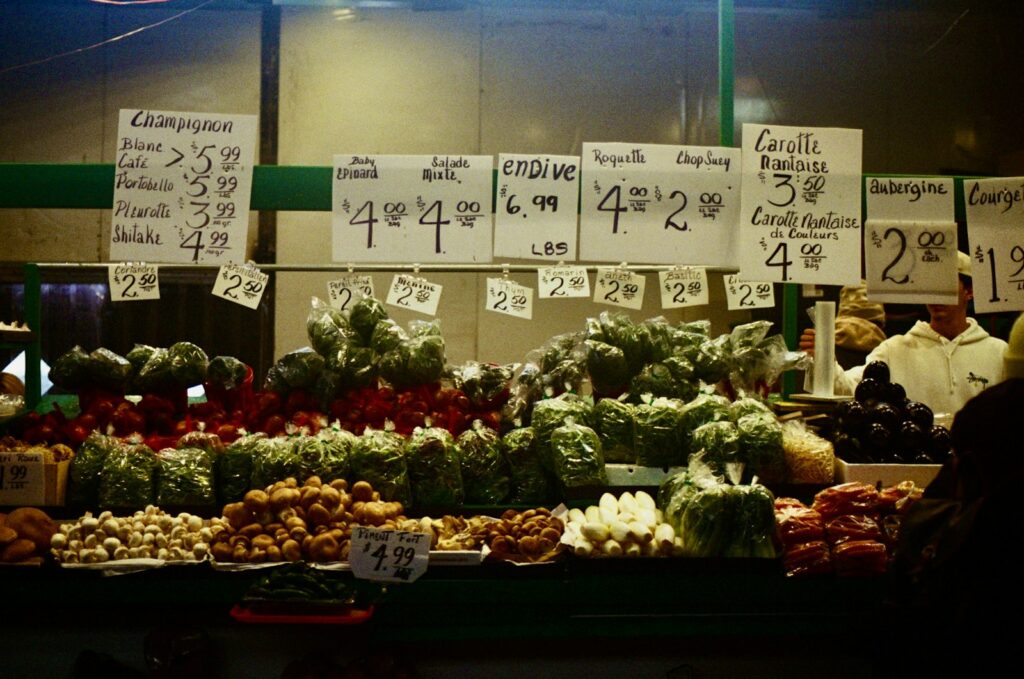
Mercato Testaccio is a working neighbourhood market, with fresh produce, fish, meat, cheese, clothing and prepared-food stalls. It is housed in a covered, open-sided building rather than the original market location in Piazza Testaccio.
For a meaningful food-focused visit, around 45 to 75 minutes inside the market is a useful target. A shorter stop can be sufficient for one or two tastings, while a longer visit gives more time to talk about ingredients and explore several counters.
Ask the provider to distinguish between:
- Time spent walking through the market.
- Actual food tastings purchased from market vendors.
- Free time for browsing or personal shopping.
- Seated meals at restaurants elsewhere in Testaccio.
There is also an archaeological area beneath the market. It should not be confused with the ordinary food hall. The market’s official archaeological information currently states that visits are temporarily suspended for renovation work. Do not assume access to the underground remains is included simply because a tour mentions Roman history.
When Is a Private Tour Worth Paying More For?
A private guide is particularly useful when the group has specific food interests, dietary requirements, young children or a slower walking pace.
It can also make sense for a family or group of friends who want to remain together rather than joining other travellers at each stop.
Private arrangements are less necessary if your main goal is to sample a few snacks at the market. You can enter the public market independently during opening hours and purchase food directly from the stalls.
Pay close attention to the terms private, semi-private and small-group. A semi-private tour may simply limit the number of participants. If exclusivity matters, request written confirmation that no unrelated guests will join your departure.
What Should the Quoted Price Include?
There is no single standard price for a private Testaccio experience. Published offers differ in duration, group size, food quantities, drinks, restaurant arrangements and the amount of private-guide time.
Comparing prices per person can also be misleading. Some operators charge a minimum amount for the group, while others calculate a per-person rate or offer a private booking only above a minimum number of participants.
Before accepting a quote, clarify these details:
- Guide: Is the price for a dedicated guide throughout the entire experience, and in which language?
- Food: How many tasting stops are included? Is there a seated meal, and are the portions substantial or sample-sized?
- Drinks: Are coffee, water, soft drinks and wine included? How many servings?
- Extra purchases: Are personal shopping, additional food, extra drinks and gratuities excluded?
- Transport: Does the tour begin at a designated meeting point, or is hotel collection specifically included?
- Total cost: Does the quoted amount cover the whole party, applicable taxes and any booking charges?
One of the most important questions is whether the guide pays for tastings at the stalls or whether guests purchase food as they go. Both arrangements can work, but the second makes the eventual cost dependent on what you choose.
For groups, ask whether food is individually portioned or served on shared platters. A quoted number of tastings does not necessarily mean the same number of separate dishes per person.
Meeting Points, Transport and Luggage
Food tours commonly begin at a public square, café or landmark in Testaccio. Piazza Testaccio and the market itself are different places, so do not treat the names as interchangeable.
The market has entrances from Via Beniamino Franklin, Via Alessandro Volta, Via Aldo Manuzio and Via Lorenzo Ghiberti. If the booking simply says “meet at Testaccio Market,” request the exact entrance and a recognisable landmark.
Piramide station on Metro Line B is a useful public transport connection for the neighbourhood. There is still a walk from the station to the market or meeting square, so allow additional time rather than treating metro arrival as tour arrival.
If you are using public transport, consult ATAC’s official service information for your travel date. For the wider journey, the Italy on Foot article on getting around Rome explains how to combine the metro, buses and walking.
Unless the booking explicitly includes pickup, expect to reach the meeting point independently. A private guide does not automatically mean a private vehicle.
Avoid bringing large suitcases. Food tours involve narrow shop interiors, busy counters and repeated stops. The market should not be assumed to offer luggage storage, and a walking guide may have no way to secure bags during a restaurant visit. Ask the provider before booking if you will be travelling directly from your accommodation, a railway station or an airport.
Children, Dietary Requirements and Accessibility
Private tours can be easier to adapt for families, although age policies and children’s food allowances vary between providers.
For younger children, check whether the booking includes a tasting portion for each child, whether there is a reduced children’s rate and whether the route has opportunities to sit down. A two-hour tasting walk may suit a family better than a three-and-a-half-hour programme with several restaurant stops.
For guests with limited mobility, ask for the expected walking distance, standing time and availability of seating. Testaccio has generally manageable neighbourhood streets, but pavements, kerbs, uneven surfaces and individual shop entrances can create difficulties.
The covered market should not be treated as proof that every stop on the tour is wheelchair accessible. Request details about each venue, any steps, accessible toilets and whether the route can be adjusted. If travelling through Piramide station, ATAC publishes current metro accessibility information, including lift and assistance details.
Food allergies need confirmation before payment
Roman food experiences frequently involve wheat, dairy, eggs, cured pork products and shared food preparation equipment.
Vegetarian substitutions may be possible, but the traditional menu becomes more restrictive for vegan visitors. Gluten-free requests are particularly important because pizza, bread and pasta feature heavily in many itineraries.
Anyone with coeliac disease or a serious food allergy should ask whether each planned vendor can prevent cross-contact, rather than accepting a general promise that the guide can adapt the menu. Some operators specifically exclude guests with severe allergies or cannot guarantee safe substitutions.
Explain dietary needs in the first enquiry, including ingredients that must be avoided and whether shared preparation equipment is acceptable. Ask for a clear answer before paying. A private booking alone is not a food-safety guarantee.
What Happens in Rain or Extreme Heat?
Mercato Testaccio is covered, making the market portion more comfortable in light rain or strong sunshine. However, the building is open-sided and many guided routes include outdoor walking.
Food tours generally continue in ordinary rain, but each operator sets its own policy. Ask whether the route can be shortened, whether additional indoor seating is available and what happens if severe weather makes the original itinerary impractical.
In summer, a morning departure also reduces the amount of walking during the hottest part of the day. Families with small children and guests who have difficulty standing for extended periods may prefer a shorter itinerary with a planned seated lunch.
Questions to Send Before Confirming a Private Tour
A short written enquiry can prevent most booking misunderstandings. Include the travel date, number of adults and children, preferred language, dietary requirements, mobility needs and whether you want a market-heavy visit or more time in traditional restaurants.
Then ask the provider:
- Will the experience be exclusively for our group?
- What time does the tour start and finish, and how much time is spent inside Mercato Testaccio?
- Which food tastings, drinks and seated dishes are included in the total price?
- Can the route accommodate our dietary and accessibility requirements?
- What is the exact meeting point, and where will the tour finish?
- What deposit or advance payment is required, and what is the cancellation deadline?
- If a planned vendor is closed, will a comparable tasting be substituted?
The booking confirmation should identify the date, local start time, meeting instructions, group size, inclusions, total payment and the operator’s contact details.
Pay particular attention to private-tour cancellation conditions. They can be stricter than those for shared departures, especially where guides or restaurant arrangements have been reserved specifically for your party.
Check whether cancellation deadlines are measured in local Rome time, whether deposits are refundable and what happens if the operator cancels. If a tour requires a minimum number of paying guests, confirm how that minimum applies to your group.
If a Stall Is Closed or Your Guide Is Late
A market itinerary depends on individual vendors, so some flexibility is normal. A food stall may close unexpectedly, run out of a particular dish or be unavailable because of a holiday.
The key question is what the operator provides instead. Replacing one small tasting with another comparable tasting may be reasonable. Removing the main market portion or a promised seated lunch is a more substantial change.
Ask for the substitution policy in advance, particularly if a particular dish was the reason you chose the experience.
If you cannot find your guide, check the written meeting instructions, including the specific side of a square or market entrance. Contact the operator using the booking telephone number before leaving the meeting point. Take note of the time and keep any messages if there is a dispute about a missed departure.
Do not assume that arriving late will automatically entitle you to a refund or that a delayed tour can be extended. What happens depends on the agreed terms and the circumstances.
Can You Explore Testaccio Market Without a Guide?
Yes. The public market can be visited independently during normal opening hours, and there is no need to purchase a guided experience simply to browse the food stalls.
A straightforward self-guided morning could begin with coffee, continue through the fresh-food counters and finish with pizza, supplì or a market sandwich for lunch. You can also buy ingredients to take back to accommodation with cooking facilities.
For practical advice on shopping at Roman food markets, including ordering by weight and choosing produce, see the Italy on Foot article on grocery shopping in Rome.
If you are fitting Testaccio into a longer stay, you can use the Italy on Foot trip planner to organize the neighbourhood visit alongside your other Rome activities and travel days. Keeping the market visit on a morning with enough time for lunch is more useful than squeezing it between two fixed-entry attractions.
A self-guided visit is especially sensible for travellers who prefer to choose their own food, have a limited budget or only want one or two specific specialties.
A private guide becomes more useful when you want detailed explanations of Roman ingredients, introductions to different food traditions, a coordinated sequence of multiple tastings or an itinerary adapted to your group’s needs.
The Final Decision: Choose the Market Time Before the Number of Tastings
When comparing two private food experiences, look beyond the advertised quantity of food. Ten quick tastings with little time at the market may be less useful than six carefully chosen stops that include conversations about ingredients and a proper Roman lunch.
For a market-centred visit, look for a Monday-to-Saturday morning departure, roughly an hour inside Mercato Testaccio, manageable tasting portions and a clearly specified seated meal if you want one.
For a shorter experience, concentrate on the market and a few traditional street foods. If your main interest is carbonara, amatriciana and other restaurant dishes, a lunch-focused route may be a better fit.
Before payment, make sure the provider confirms the actual market visit, total food allowance and cancellation conditions in writing. Those three details will tell you considerably more about what you are purchasing than the length of the tasting list.