For most travelers staying around Via Roma, Piazza San Carlo, or the historic center, Torino Porta Nuova is the more convenient station. Choose Porta Susa when your ticket specifically uses it, when taking the train to or from Turin Airport, when traveling on the direct TGV to Paris, or when staying on the western side of the city center. Whichever you end up at, the two are only three stops apart on Metro Line 1, so a wrong choice costs minutes rather than a missed vacation.
Many Frecciarossa and Italo trains call at both, often leaving the terminus first and stopping at the through station ten to fifteen minutes later on their way toward Milan, Rome or Venice. That does not make the names interchangeable, though. Always check the station printed on your actual ticket.
Which Torino station should you use?
- Historic center, Via Roma, Piazza San Carlo or San Salvario: Porta Nuova is usually easier.
- Turin Airport by train: use Porta Susa. Airport trains do not run into the terminus.
- Paris by direct TGV: use Porta Susa.
- Cit Turin, Piazza Statuto or the western side of the center: Porta Susa is often closer.
- Your ticket already names a departure point: use it rather than choosing based on geography.
- Your train is offered from either: choose whichever is closest to your accommodation or onward connection.
Torino stations compared side by side
| Porta Nuova | Porta Susa | |
|---|---|---|
| Type | Terminus, trains end beside the main concourse | Through station, tracks below street level |
| Passenger tracks | 20 | 6 |
| Best for | Via Roma, Piazza San Carlo, San Salvario | Airport trains, Paris TGV, western center |
| Airport rail link | No | Yes, about 30 minutes |
| Left luggage inside | Yes, near track 1 | No, use nearby private storage |
| Step-free access | Level or ramp to every track | Elevators and escalators between levels |
Why Porta Nuova is usually easier for sightseeing
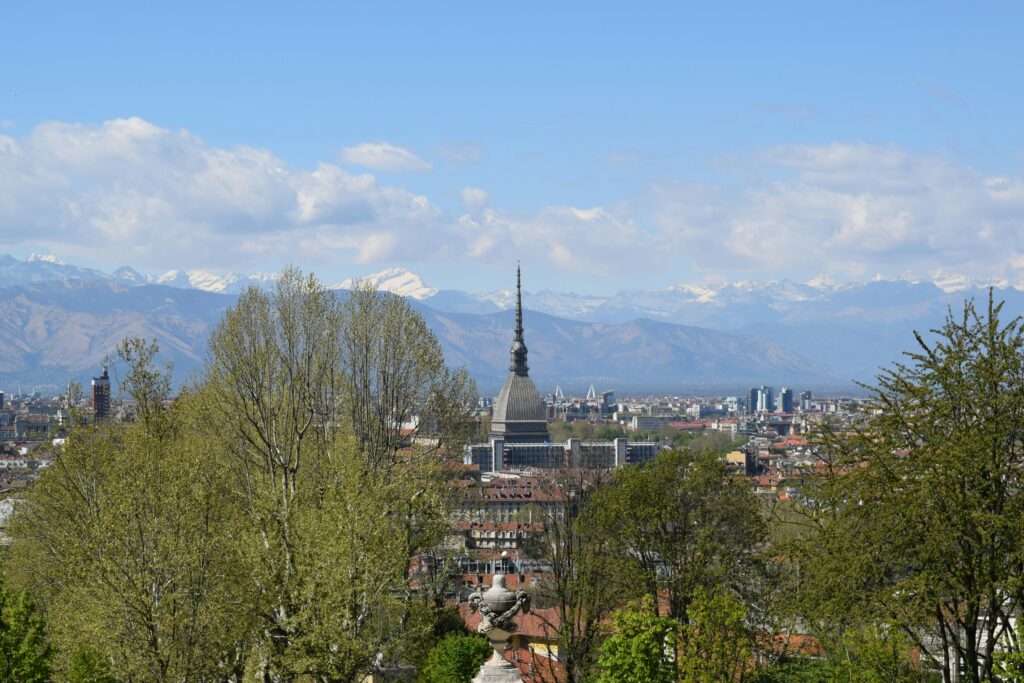
Turin Porta Nuova station is the large terminal at the southern edge of the central street grid. Leave by the main front of the building and you emerge at Piazza Carlo Felice, with Via Roma continuing north toward Piazza San Carlo and Piazza Castello. Piazza San Carlo is roughly eight minutes away on foot and Piazza Castello about fifteen.
That geography makes it particularly convenient when your hotel is in the traditional tourist center. You can step outside and set off without first taking another train, bus, or tram.
It is also physically straightforward with luggage. Because it is a terminus, the tracks end at the main concourse rather than passing underneath the building. You go from the end of your train into the station building and then toward the exits, and RFI lists every track as reachable step-free by level access or ramp.
There are 20 passenger tracks, so do not assume that a high number will be beside the track you used earlier. Check the Partenze screens for your train and binario, the Italian word for platform.
Which Porta Nuova exit should you use?
For the city center, follow signs toward the main frontage and Piazza Carlo Felice. Once outside, Via Roma provides the simplest orientation point.
The building also has side access toward Via Sacchi and Via Nizza. The Via Sacchi side is useful for taxis and surface transport, while vehicle access is also arranged on the Via Nizza side. If you simply want to reach Piazza San Carlo, resist the temptation to follow whichever side door happens to appear first. Head for Piazza Carlo Felice.
Why Torino Porta Susa works differently
Porta Susa is a modern through-station rather than a traditional terminus. It sits along Corso Bolzano, northwest of the city center, inside a long glass gallery, with its six tracks below street level.
That distinction matters more than it sounds. At the southern terminus you generally move horizontally from train to exit. At Porta Susa station you normally come up from the tracks using escalators, stairs, or elevators before reaching street level or the underground line.
RFI lists elevators to the tracks here, operating from 05:00 to midnight, but its accessibility entries are not entirely consistent and individual elevators can be out of service. Travelers with reduced mobility should check the official RFI station page and consider booking assistance (see the Sala Blu note below).
Do not get off at XVIII Dicembre
This is an easy mistake when looking at the city map. Line 1 has both a XVIII Dicembre stop and a Porta Susa stop, one immediately after the other.
If you are transferring directly between the railway and the underground, follow signs for Porta Susa M1. There is normally no reason to go outside to XVIII Dicembre just because you have seen Piazza XVIII Dicembre associated with the area.
High speed trains from Torino often call at both
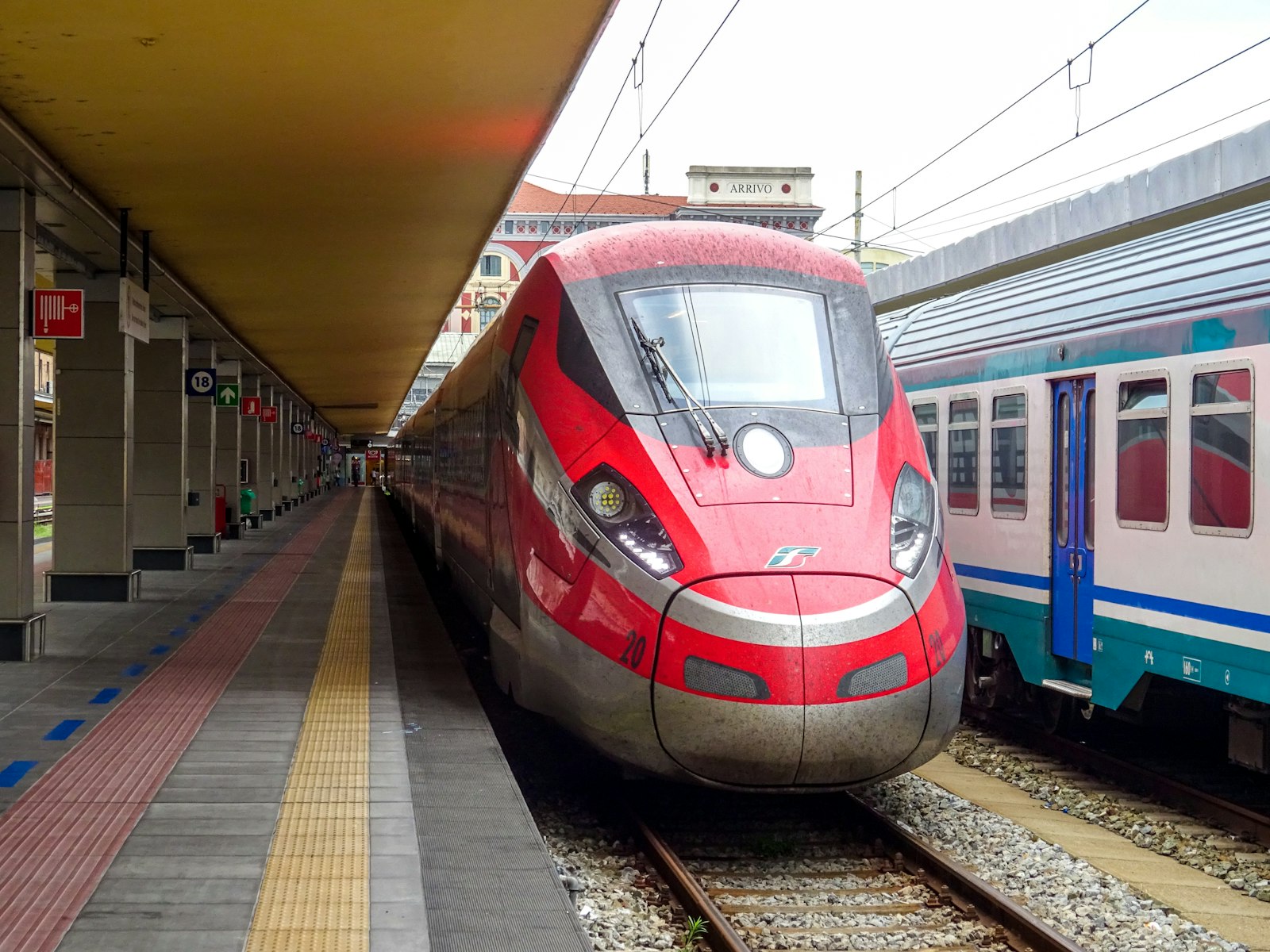
A common pattern on Frecciarossa and Italo high speed services heading toward Milan, Rome, Naples or Venice is:
- The train starts at the terminus.
- Ten to fifteen minutes later it calls at the through station.
- It continues toward Milan and destinations farther east or south.
Arriving in the city, the sequence is normally reversed. A traveler staying in the west of the center can therefore often get off a stop early and save time.
Check the exact service rather than relying on that pattern, because train services change with each timetable. Not every train serves both, and regional train services and the SFM suburban lines follow different routes. Trenitalia and Italo trains each use both buildings, so the operator name alone does not tell you where you will board.
If your ticket has already been issued from a particular departure point, the safest approach is to board there. If switching would be more convenient, check your operator’s ticket conditions or modify the booking first rather than assuming that a stop by the same train automatically makes your ticket interchangeable.
Traveling between Torino and Venice
Direct Frecciarossa and Italo trains link the city center with Venice by high speed rail in roughly four hours twenty to four hours thirty. Eastbound services usually start at the terminus and call at the through station, so either works for this rail journey. Pick whichever is nearer your hotel and confirm it on your booking.
Porta Susa is the station for Turin Airport
The railway connection from Torino Caselle Airport runs through the western station. Trenitalia’s SFM4, SFM6 and SFM7 suburban lines serve the airport and continue across the city via Rebaudengo Fossata, Porta Susa and Lingotto, without reaching the southern terminus.
That makes Turin Porta Susa station the obvious choice when you are connecting between a train and a flight. The train journey from the airport takes roughly half an hour and the regional fare is currently €3.70. The airport reports around three trains an hour through most of the day, but first and last departures vary, so check the Torino Airport train information before relying on a particular time. Our Turin Airport train guide covers the trip step by step.
If your hotel is near Via Roma, there is no need to complicate the airport journey. Take the airport train into the city, transfer to Line 1, and ride three stops through Vinzaglio and Re Umberto.
Going to Paris? Check Porta Susa first
Direct TGV INOUI services between the city and Paris Gare de Lyon depart from Porta Susa station, with a journey of around five and a half hours. The Fréjus line through Modane reopened to passenger trains in spring 2025 after a long closure caused by the 2023 landslide in the Maurienne valley.
Trenitalia’s Frecciarossa between Milan and Paris also calls in the city, although it has had temporary suspensions for engineering work. If your journey involves France, read the departure field carefully and check current times on the SNCF Connect or Trenitalia website.
Getting between Torino stations
Line 1 of the underground is normally the easiest option. The sequence is:
- Porta Susa
- Vinzaglio
- Re Umberto
- Porta Nuova
The ride itself takes about four minutes. A GTT City ticket costs €1.90 bought digitally or €2.00 on paper, is valid for 100 minutes and includes a single underground ride. Every stop on the line also has a contactless gate that accepts Visa, Mastercard and American Express cards, phones and watches, which saves lineing at a machine with your bags.
With luggage, allow additional time for getting down from the railway level, through the gates, waiting for a train, and back up to the mainline tracks at the other end. For a connection between two separately booked trains, do not plan around the four-minute ride alone. A 30-minute gap can disappear surprisingly quickly once escalators and a small incoming delay are added. A buffer of 45 to 60 minutes is more comfortable when the onward train is reserved and missing it would be expensive.
Tram and bus routes also link the two, and on a fine day without heavy bags the 1.5 kilometer walk along Corso Vittorio Emanuele II and Corso Vinzaglio takes around 20 minutes.
Late arrivals: check the Torino timetable
Do not assume Line 1 runs late every night. GTT currently operates the metro from 05:30 to 21:30 Monday to Thursday, until 01:00 on Friday and Saturday, and from 07:00 to 21:30 on Sundays and public holidays. On the other evenings a replacement bus, identified as M1S, covers the route until about 00:30.
If you arrive late and see shutters at the entrance, look for signs mentioning bus sostitutivo or M1S. A taxi is the simpler fallback when you have several bags, young children, or little time before an onward departure. GTT publishes current hours and service notices online, which is worth checking for holidays and engineering works.
If you are building several rail and local-transport connections into the same trip, the Italy on Foot trip planner can help keep the changes and overnight stops in a more sensible order.
Which is better with luggage?
The terminus usually wins for simple movement. Trains end beside the main concourse and there is less dependence on elevators and escalators. That can make a noticeable difference with a large suitcase, stroller, or multiple bags.
It also has a deposito bagagli, luggage storage, on the ground floor near track 1, plus a self-service locker option near the entrance, according to Turismo Torino. RFI lists no left-luggage office inside Porta Susa station, so travelers starting there should look at private storage points on nearby Via Cernaia.
Porta Susa station is still manageable with luggage, but expect to change levels. If you need an elevator, follow the elevator pictogram rather than following the crowd automatically onto an escalator. This is particularly useful because the long glass building can make the correct exit appear farther away than expected.
Assistance for reduced mobility
RFI’s Sala Blu service in the city covers both buildings and is open from 07:45 to 22:30. Request help at least one hour before travel, or earlier through the Sala Blu booking process, so staff can meet you at the right train.
Which Torino station is closer to your hotel?
Choose Porta Nuova for
- Via Roma
- Piazza San Carlo
- the southern half of the historic center
- San Salvario
- hotels around Corso Vittorio Emanuele II near the terminus
Choose Porta Susa for
- Cit Turin
- Piazza Statuto
- accommodation around Corso Francia or the western side of the center
- direct airport rail connections
- direct TGV services to and from France
For Piazza Castello, the Egyptian Museum, and the central shopping streets, the difference is not dramatic once public transport is factored in. The terminus generally gives the simpler route on foot, while the western station can still be convenient if it saves you staying on a train for another stop or making an unnecessary rail connection.
Other railway stations in Torino
These two handle most long-distance train travel, but Turismo Torino lists six city stations in total: Porta Nuova, Porta Susa, Lingotto, Rebaudengo Fossata, Stura and Grosseto. Lingotto, in the south of the city near the Lingotto exhibition area, is served by many regional and some high speed trains. The others mainly matter if you are using the SFM suburban network.
Live departures and tickets
For real-time departures from Torino Porta Susa, use RFI’s official arrivals and departures board, which shows the track once it is assigned. Buy train tickets from the Trenitalia or Italo website or app (Italo tickets are not sold through Trenitalia), or from the machines inside, and keep the booking on your phone or printed until you leave the arrival station.
Useful station words to recognize
- Partenze: departures
- Arrivi: arrivals
- Binario: platform or track
- Uscita: exit
- Metropolitana / M: underground
- Ascensore: elevator
- Scale mobili: escalators
- Biglietteria: ticket office
- Deposito bagagli: luggage storage
- Bus sostitutivo: replacement bus
The mistake that causes most problems
Do not treat “Turin” as a single railway station. Booking sites may let you search the city broadly, but your final ticket will identify the building you actually need. Look for Torino Porta Nuova, sometimes abbreviated to Torino P. Nuova, or Torino P. Susa.
If you discover that you are in the wrong place, do not panic and do not set off with your suitcase unless you particularly want the exercise. Follow the signs for Line 1. Three stops later, you can correct the mistake far more efficiently.
FAQ
How do I get between the Turin stations?
Take Line 1 of the underground three stops, via Vinzaglio and Re Umberto. The ride takes about four minutes and a GTT City ticket or contactless tap covers it. Allow at least 30 minutes door to door with luggage.
Which Torino station is closest to the city center?
The terminus on Piazza Carlo Felice, at the bottom of Via Roma, about eight minutes from Piazza San Carlo on foot.
How many railway stations are there in Turin?
Six are in regular use: the two main ones plus Lingotto, Rebaudengo Fossata, Stura and Grosseto.
Which station do airport trains use?
Trains from Caselle Airport serve Porta Susa station, Lingotto and Rebaudengo Fossata, not the terminus. Change to Line 1 if you are heading to Via Roma.
Can I board at a different Turin station from my ticket?
Even when the train stops at both, the ticket is issued for the named departure point. Check the fare conditions or change the booking before boarding elsewhere.
Where can I see live departures?
On the screens inside, in the Trenitalia and Italo apps, and on RFI’s official arrivals and departures board.