A guided wine and cheese tasting in Rome usually means spending one to two hours in a wine bar, tasting studio or cellar, sampling several Italian wines alongside selected cheeses and other small bites. The host explains the wines, how the cheeses are made and why particular combinations work. Before booking, check how many wines and cheeses are included, whether the food is substantial enough to replace a meal, who leads the session and whether the price covers everything served.
Search results for wine tasting Rome include everything from a simple three-glass introduction to private sommelier sessions and multi-course dinners. These are quite different experiences. A small, seated tasting is usually the most manageable option if you want to learn about Italian wine without committing an entire evening.
What happens during a guided wine and cheese tasting?
Most city-center tastings take place at an enoteca, the Italian word for a wine shop or wine bar, or in a dedicated tasting room. You arrive at a specified time, meet the host and sit down for a guided selection of wines and food pairings.
A typical session follows a fairly simple sequence:
- The host introduces the wines, their regions of origin and the grape varieties used.
- You taste the first wine, usually a white or sparkling variety, and discuss its appearance, aroma and flavor.
- A cheese or another food pairing is introduced so you can compare the wine before and after tasting the food.
- The session continues through different wines, often moving toward fuller-bodied reds or a sweet wine.
- There is time for questions about Italian wine labels, regional producers and choosing wine in restaurants.
Current Rome experiences vary considerably. Some serve three wines in roughly an hour, while others offer five or six selections over two hours. A tasting dinner may run for two and a half hours or longer.
The educational element matters. A guided experience should give you an opportunity to ask questions and understand the pairings. If the listing simply promises wine, cheese and a reserved table, check whether a host actually leads the tasting or whether you are paying for a prepared tasting board.

Choosing between a wine bar, tasting class and food-pairing dinner
Short seated tasting at an enoteca
This suits travelers who have limited time or want a relaxed introduction to Italian wines. You generally remain at one location, sample a fixed selection and receive an explanation from the host.
Look for a session lasting around 60 to 90 minutes, with a clearly stated number of wines and food pairings. It works particularly well before dinner, provided the tasting ends early enough for your restaurant reservation.
Sommelier-led tasting class
A more educational session may cover grape varieties, acidity, tannins, aromas, production methods and the terminology found on Italian wine labels.
Choose this if you enjoy learning about wine rather than simply sampling it. Ask whether the experience is designed for beginners or assumes some previous knowledge. Also check the maximum number of participants, as a group of six offers a different level of interaction from a table of twenty.
Wine and cheese pairing focused on local products
Some sessions give cheese as much attention as wine. The host may explain differences between fresh and aged cheeses, milk types, maturation and the way salt or fat changes the taste of wine.
These are particularly suitable for people interested in Italian food production. Before paying, ask whether there will be several identifiable cheeses or just a mixed platter accompanying the drinks.
Wine-pairing dinner
A dinner combines a structured tasting with more substantial food. Depending on the provider, you might receive several courses, a pasta dish, dessert and individual wine pairings.
This can make sense if you want your tasting to replace dinner. Confirm the number of courses and whether every course has its own wine. A listing described as a wine and food experience may still offer only a board of snacks.
Walking wine tour
Walking tours may visit multiple wine bars or combine tastings with neighborhood history. They take longer and involve movement between venues.
Choose this format when exploring the neighborhood is part of the attraction. If you mainly want to discuss wine with a knowledgeable host, a seated session usually offers more uninterrupted tasting time.
Which wines and cheeses should you expect?
Rome is a useful place to discover wines from Lazio, the region surrounding the city, although many guided sessions cover producers from throughout Italy.
For a tasting with a local focus, look for wines such as Frascati or Frascati Superiore, whites associated with the Castelli Romani hills, and Cesanese, a red grape strongly associated with Lazio. You may also encounter Bellone, Malvasia or Cannellino di Frascati, a sweet wine.
The Italian national tourism website’s Lazio wine itinerary provides additional background on the region’s wine-producing areas.
On the cheese side, you might encounter:
- Pecorino Romano DOP: A hard, salty sheep’s-milk cheese associated with Roman cooking. Despite its name, the protected production area also includes Sardinia and part of Tuscany.
- Ricotta Romana DOP: A softer, delicate whey cheese associated with Lazio.
- Fresh mozzarella or buffalo mozzarella: Often used to demonstrate lighter pairings.
- Aged Italian cheeses: These may be selected to accompany stronger red wines or demonstrate how maturation changes flavor.
Not every session includes these particular products, and a tasting described as Italian rather than Roman may feature cheeses from other regions.
Ask for the planned selection if local products matter to you. Seasonal substitutions are reasonable, but a provider should be able to explain the general style of wines and cheeses included.
How much food is included?
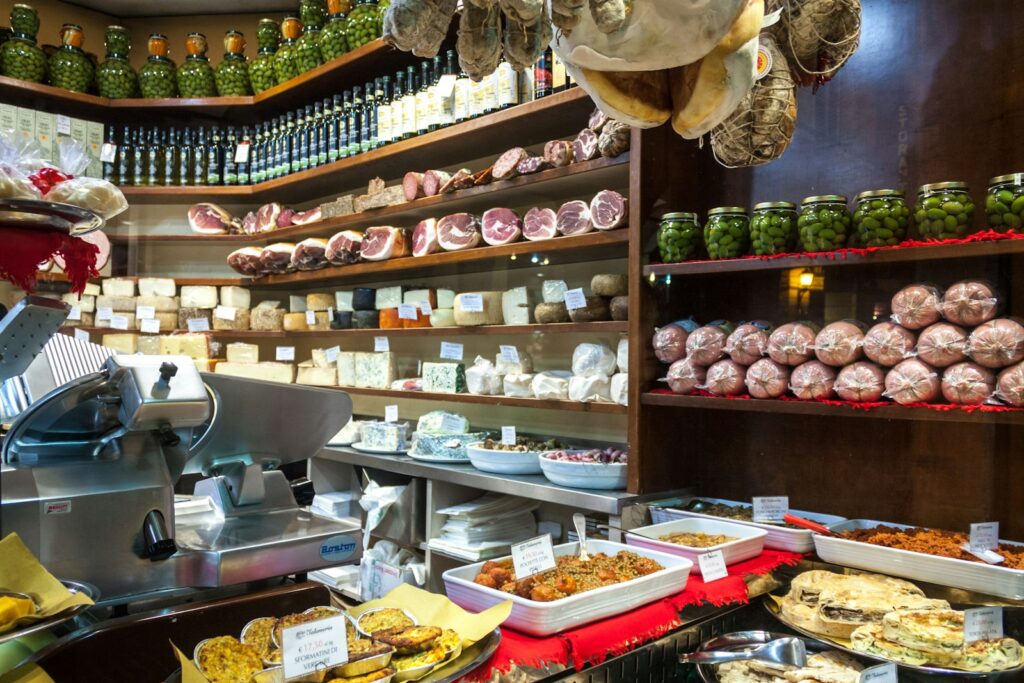
This is one of the most useful questions to settle before booking. A tasting may include three small cheese samples, an individual board, a shared platter or a complete seated meal.
Italian descriptions can help clarify what you are buying:
- Degustazione: A tasting, usually involving several small samples.
- Abbinamento vino e formaggio: A wine and cheese pairing.
- Tagliere: A board of cheese, cured meats or other prepared foods.
- Salumi: Cured meats, such as prosciutto or salami.
- Aperitivo: Drinks accompanied by snacks or small dishes, typically before dinner.
- Assaggio: A taste or sample.
- Calice: A glass of wine.
A tagliere di formaggi e salumi normally contains both cheeses and cured meats. If you specifically want a cheese-focused experience, check that the board is not dominated by prosciutto and salami.
Also ask whether portions are individual or shared and if bread, crackers, water and other accompaniments are included. Small food pairings are designed to demonstrate flavors and may leave you ready for dinner afterward.
Understanding the price and possible extras
There is no single standard price for guided tastings in Rome. The cost depends on the number and selection of wines, food quantity, group size, host, venue and whether the booking is shared or private.
Compare the full package rather than the headline price. In particular, establish:
- Whether the advertised amount is per person or for the entire group.
- How many wines are included and whether they are tasting pours or full glasses.
- Whether the cheese and other food are included in the quoted price.
- Whether water, bread, taxes and any booking fees are included.
- Whether additional glasses or bottles are charged separately.
- Whether a minimum number of paying participants applies.
- Whether the host’s fee is separate from the cost of the wine and food.
The last point deserves particular attention. Some private experiences charge for the sommelier’s time while guests pay for their wine and food at the venue. Such an offer can initially appear cheaper than an all-inclusive tasting.
Ask for the total expected cost for your group, including the tasting menu. For a 2027 reservation, confirm the lineup and price for your actual date. Providers may change the number of wines, menus or available time slots between seasons.
Tips and purchases of bottles are generally separate unless the listing explicitly says otherwise. There should be no assumption that you must purchase wine afterward.
Children, non-drinkers and dietary restrictions
Can children attend?
Italy prohibits the sale and serving of alcoholic drinks to anyone under 18, as explained by the Italian Ministry of Health.
Individual tasting venues may have stricter participation rules. Some operate adults-only sessions, while others welcome children for the food portion or provide a separate non-alcoholic option.
Ask whether children are permitted inside the venue, whether they need their own reservation and what food or drinks their price includes. Do not assume that a child can attend free of charge simply because they will not be drinking wine.
What about non-drinkers?
If someone in your group does not drink alcohol, ask whether the venue offers a reduced non-drinker price or a suitable alternative. Some sessions offer soft drinks or another food-focused option, while others have a fixed participation fee.
The same applies if you plan to taste only some wines rather than finish every glass. You can discuss the wines and food without drinking every pour.
Vegetarian, vegan and allergy requirements
Cheese tastings need extra attention for certain diets. A vegetarian board may exclude meat but still include cheeses made with animal rennet. If this matters to you, ask about the specific cheeses rather than requesting only a vegetarian platter.
For allergies and intolerances, tell the provider exactly what must be avoided. Dairy, gluten, nuts and ingredients in sauces or bread accompaniments may be relevant. Some venues use shared preparation surfaces and cannot guarantee the absence of cross-contact.
Vegan substitutions are particularly difficult for a cheese-focused tasting, so confirm what will actually be served before paying. A general promise to accommodate dietary preferences is not sufficient if the available replacement is only bread and vegetables.
Meeting points, accessibility and practical timing
Most short, seated tastings begin directly at a wine bar or studio. Hotel pickup is generally unnecessary and should not be assumed to be included.
Check the complete street address, the name of the establishment and any specific entry instructions. In Rome’s historic center, venues can be tucked inside courtyards or below street level. Meeting instructions may refer to a nearby square, while the actual entrance is on a smaller adjoining street.
Allow around 10 to 15 minutes before the scheduled start if the provider requests early arrival. This is particularly helpful for a group tasting where the host plans to serve everyone together.
For mobility needs, ask specific questions rather than relying on the description of a venue as accessible. Historic cellars may have steep steps, narrow passages or no step-free entrance. Confirm whether there are accessible toilets, how long you will need to stand and whether seating is available throughout.
Large suitcases may also be a problem. Small tasting rooms are unlikely to have dedicated luggage storage. If you are attending between hotel checkout and a train departure, ask whether your bags can be accommodated or arrange storage elsewhere.
Indoor tastings generally operate regardless of rain. Walking tours are different, so check what happens in heavy rain, extreme heat or other conditions that make the planned route difficult.
How to book a guided tasting
For a scheduled small-group session, the process usually involves choosing the date, time, number of guests and any available tasting package. Some venues accept instant online reservations, while smaller studios may confirm availability directly.
Private tastings generally require more information. Your first enquiry should include the date, preferred starting time, number of participants, language, dietary requirements and any accessibility needs.
Before paying, obtain written confirmation of:
- The session format: Seated group tasting, private class, walking route or dinner.
- The inclusions: Number of wines, food portions, water and any additional activities.
- The total price: Including taxes, booking charges and any required deposit.
- The location: Exact address, entrance details and ending location if different.
- The duration: Expected starting and finishing times.
- The language: Whether the entire tasting will be conducted in English or another requested language.
- The cancellation terms: The refund deadline, rescheduling conditions and procedure if the operator cancels.
Cancellation policies differ significantly. Some group tastings allow free cancellation until 24 hours beforehand, while other experiences require 48 hours or several days’ notice. Private sessions may have stricter terms because staff and space have been reserved for your group.
Confirm how any deposit is treated and whether the final payment will be collected online or at the venue. Avoid relying on a general booking-platform refund message if the individual experience displays different terms.
Should you choose a private tasting?
A private session can be useful when you have a particular interest in wine, want to concentrate on Lazio producers or need more flexibility with timing and dietary arrangements.
It also makes sense for a group that wants to learn together without sharing the experience with strangers. You may be able to request specific wine styles, a quieter setting or a more advanced discussion.
However, a private tasting is not automatically a better purchase. For one or two beginners, a scheduled small-group class may provide everything needed at a lower total cost.
Before choosing private service, ask what you gain beyond having the table to yourselves. A personalized selection, longer discussion and flexible start time are meaningful differences. Merely using the word private does not tell you what is included.
Fitting a wine tasting into your Rome itinerary
A late-afternoon tasting can fit between sightseeing and dinner. If your session includes only small bites, leave time for a proper evening meal afterward. If it includes several courses, there may be little reason to arrange another restaurant booking.
Consider the location as carefully as the tasting itself. Trastevere, Monti and the historic center all have wine bars and food-oriented experiences, but returning to your accommodation afterward may involve different journeys. The Italy on Foot guide to Rome neighborhoods can help you understand how these areas fit into your visit.
Public transport is usually a practical option if the venue is not within walking distance. Rome’s ATAC network supports contactless payment on its buses, trams and metro services. Check the official Tap & Go instructions before traveling, particularly if you need to change services. If you will be drinking, arrange your return without driving.
To fit the tasting around museum visits, meals and other reservations, you can organize your Italy itinerary and keep the afternoon from becoming overfilled.
When a winery visit outside Rome makes more sense
A tasting inside Rome is convenient because you do not need to spend time traveling to the vineyards. You can learn about Italian wine, meet a sommelier and try regional products without leaving the city.
However, a city tasting rarely includes seeing grapevines, production facilities or the winemaking process itself. If those activities matter more than the food pairing, consider visiting a winery in the countryside.
Frascati and the surrounding Castelli Romani area are natural options for travelers based in Rome. Winery visits may combine cellar tours, vineyard walks and farmhouse food, although transport arrangements require more planning. The separate guide to booking a Frascati winery tasting from Rome explains the differences between train-based excursions, pickups and private transfers.
For travelers with only an hour or two available, a city-center session remains easier to arrange.
What happens if you’re late or the tasting changes?
If you are delayed, contact the venue immediately using the telephone number or messaging contact in your booking confirmation. Do not assume that the host can hold a scheduled group session for late arrivals.
Some providers allow a short grace period, while others may cancel the booking after a specified delay. The relevant deadline should appear in the booking conditions.
If the provider changes the starting time, meeting location or session format, ask for the revised details in writing. A minor substitution of wine or cheese is different from removing several advertised tastings or changing a seated class into a walking activity.
If the new arrangement no longer meets what you purchased, raise the issue before accepting the replacement and request the available refund or rescheduling options under the booking terms.
Keep the original listing, payment receipt and confirmation message until the experience is complete. These records are useful if the venue cannot locate the reservation or there is a disagreement about what was included.
Five questions to settle before paying
Two tastings with similar descriptions can provide very different experiences. These questions will usually reveal the difference quickly:
- How many different wines and cheeses will we taste? Ask whether the wine is served in tasting portions and whether the food is shared.
- Who leads the session, and how much explanation is included? Confirm that someone will guide the pairing rather than simply serve the drinks.
- Will the food replace dinner? Request a description of the portions or courses if you are planning your evening around the tasting.
- What is the complete price for our group? Include any host fee, food charges, minimum spend or deposit.
- What happens if our plans change? Confirm the cancellation deadline, late-arrival policy and contact details.
For most first-time participants, a seated session with three to five well-explained wines, clearly identified cheeses and enough time for questions is a sensible starting point. Choose a longer or private experience when the additional time, food or personalized instruction genuinely matters to you. Before confirming, make sure the booking describes exactly what will be on the table, where you need to arrive and when you can expect to leave.