If you need to avoid milk in Italy, do not treat senza lattosio, senza latte, and vegano as interchangeable. Senza lattosio means the lactose has been reduced to a very low level, not that milk has been removed. Senza latte literally means without milk, while vegano indicates no intentionally used animal-derived ingredients. For travelers eating dairy-free in Italy, the important question is whether you are avoiding lactose, milk proteins, or all animal ingredients.
Senza lattosio does not mean milk-free
This is the distinction most likely to cause trouble. A carton of cow’s milk, mozzarella, yogurt, or another dairy product can be labelled senza lattosio and still be very much a milk product.
According to the Italian Ministry of Health, the wording senza lattosio can be used when residual lactose is below 0.1 g per 100 g or 100 ml. Delactosed products may also state that they contain glucose and galactose because the lactose has been split into those simpler sugars.
So if lactose is your problem, senza lattosio is the wording you want to see. If you have an allergy to milk proteins, it is not enough. Lactose-free cow’s milk can still contain the milk proteins that matter for an allergy.
You may also see:
- delattosato: delactosed, with lactose broken down or removed to a low level
- a ridotto tenore di lattosio: reduced lactose
- naturalmente privo di lattosio: naturally free of lactose
- latte senza lattosio: lactose-free milk, still milk
- mozzarella senza lattosio: lactose-free mozzarella, still dairy
That last pair is the quickest reminder of the rule: the words after senza lattosio do not magically stop being dairy products.
Senza latte is the phrase to focus on when milk itself is the problem
Senza latte means “without milk.” It is much more relevant if you need the product to contain no milk ingredient rather than merely less lactose.
For a milk allergy, though, do not rely only on a large senza latte claim printed on the front. Turn the package around and read the ingredient and allergen information as well.
Under EU food-information rules, milk is one of the 14 allergens that must be declared when it is intentionally used as an ingredient. The legal allergen category is milk and products thereof, including lactose. On packaged food, the allergen normally stands out typographically in the ingredient list, often in bold or capital letters. The European Commission’s allergen guidance also explains the requirements for packaged and non-prepacked food.
Words worth spotting include:
- latte: milk
- burro: butter
- panna: cream
- formaggio: cheese
- siero di latte: whey
- caseina / caseinati: casein / caseinates
- yogurt: yogurt
- latte in polvere: milk powder
- proteine del latte: milk proteins
Ingredients derived from milk should make their milk origin clear in the allergen declaration, so you do not need to memorize every possible technical dairy ingredient before entering an Italian supermarket.
Vegano usually solves the ingredient problem, but not necessarily the allergy problem
A food marked vegano or vegan should not intentionally contain milk, butter, cream, cheese, or other animal-derived ingredients. That makes vegan foods useful when you want to avoid dairy ingredients altogether.
But a vegan claim and an allergen declaration do different jobs. Suitability for vegans is voluntary food information under EU rules, while the declaration of milk used as an ingredient is a mandatory allergen requirement.
A vegan biscuit, chocolate bar, or pastry can therefore have no milk in its recipe yet still carry wording such as:
- può contenere latte: may contain milk
- può contenere tracce di latte: may contain traces of milk
- tracce di latte: traces of milk
Those warnings concern possible unintended presence, usually connected with shared manufacturing or handling. If you have a milk allergy, the word vegano should not make you stop reading the label.
The same caution applies to 100% vegetale, meaning 100% plant-based. It is a useful clue about the recipe, not a replacement for checking the allergen information.
Vegetariano is not useful for avoiding dairy
Vegetariano means vegetarian, not vegan. Cheese, butter, cream, milk, yogurt, and eggs can all appear in vegetarian food.
A dish described as piatto vegetariano may contain more dairy than the meat dish beside it. Italian vegetarian cooking often leans heavily on ingredients such as Parmigiano Reggiano, pecorino, mozzarella, ricotta, mascarpone, and butter.
If a menu uses symbols, check the legend rather than assuming a green leaf means vegan. One restaurant may use a leaf for vegetarian dishes and another for vegan dishes.
How to use the allergen list in an Italian restaurant
Restaurants, cafés, bakeries, gelaterias, and other businesses selling non-prepacked food must provide information about the regulated allergens. You may find it directly on the menu, in a separate elenco allergeni, through a QR-code menu, or in documentation staff can provide.
Many Italian menus use the numbered list from Annex II of EU Regulation 1169/2011. When that standard numbering is being used, allergen 7 is milk and milk products, including lactose. Always check the restaurant’s own legend rather than treating a bare number 7 as meaningful on its own.
Useful questions are:
- Posso vedere l’elenco degli allergeni? Can I see the allergen list?
- Questo piatto contiene latte o derivati del latte? Does this dish contain milk or milk derivatives?
- Contiene burro, panna o formaggio? Does it contain butter, cream, or cheese?
- C’è rischio di contaminazione crociata con latte? Is there a risk of cross-contact with milk?
If you have an allergy rather than lactose intolerance, say so explicitly. Sono allergico/a al latte e ai derivati del latte is much clearer than simply asking for something senza lattosio.
If lactose is the issue, say Sono intollerante al lattosio. That steers the conversation toward the correct restriction instead of making staff assume you cannot eat any milk-derived ingredient.
The restaurant dishes that catch people out
Some dairy ingredients are obvious. Others arrive during cooking or at the last second.
Risotto
A vegetable, mushroom, or seafood risotto can still be finished with butter and grated cheese. The final mixing process is called mantecatura.
Ask: Si può fare senza burro e senza formaggio? Can it be made without butter and cheese?
Pasta
Tomato sauce does not automatically mean a dairy-free finished dish. Parmesan or pecorino may be added in the kitchen or offered on top. Pesto alla genovese normally contains cheese, while Roman classics such as cacio e pepe and gricia rely heavily on pecorino.
If the sauce itself is suitable, add senza formaggio, per favore.
For more menu vocabulary, the Italian menu translator is useful for decoding sauce names and cooking terms that do not reveal their ingredients at first glance.
Pizza
Pizza marinara is traditionally made with tomato, garlic, oregano, and olive oil, with no mozzarella. It can be one of the simplest choices when avoiding milk ingredients, but an allergy still requires a conversation about dough ingredients and shared preparation surfaces.
If ordering another pizza without cheese, say senza mozzarella e senza altri formaggi. Simply removing visible mozzarella does not tell you whether another cheese, dairy-containing sauce, or finishing ingredient is involved.
Gnocchi, polenta and mashed potatoes
These need questions rather than assumptions. Potato gnocchi recipes vary, sauces can contain butter or cheese, polenta may be served plain or enriched with dairy, and purè di patate commonly contains milk or butter.
Coffee bars: lactose-free milk and plant milk are different orders
At a bar, latte senza lattosio means lactose-free dairy milk. It is useful for lactose intolerance but not for someone avoiding milk proteins or animal products.
For a plant alternative, ask:
Avete una bevanda vegetale? Do you have a plant-based drink?
Common choices include:
- soia: soy
- avena: oat
- mandorla: almond
Individual bars vary, and plant drinks introduce their own possible allergens such as soy or nuts.
Also watch the coffee name. Caffè macchiato contains a small amount of milk unless you specify otherwise. Latte macchiato is mostly milk. A standard espresso does not need milk at all.
For a significant milk allergy, shared steaming equipment deserves a question too. A café may use separate jugs but the same steam wand for dairy and plant drinks. Ask staff about their procedure rather than assuming plant milk automatically means no contact with dairy.
Gelato and granita need their own check
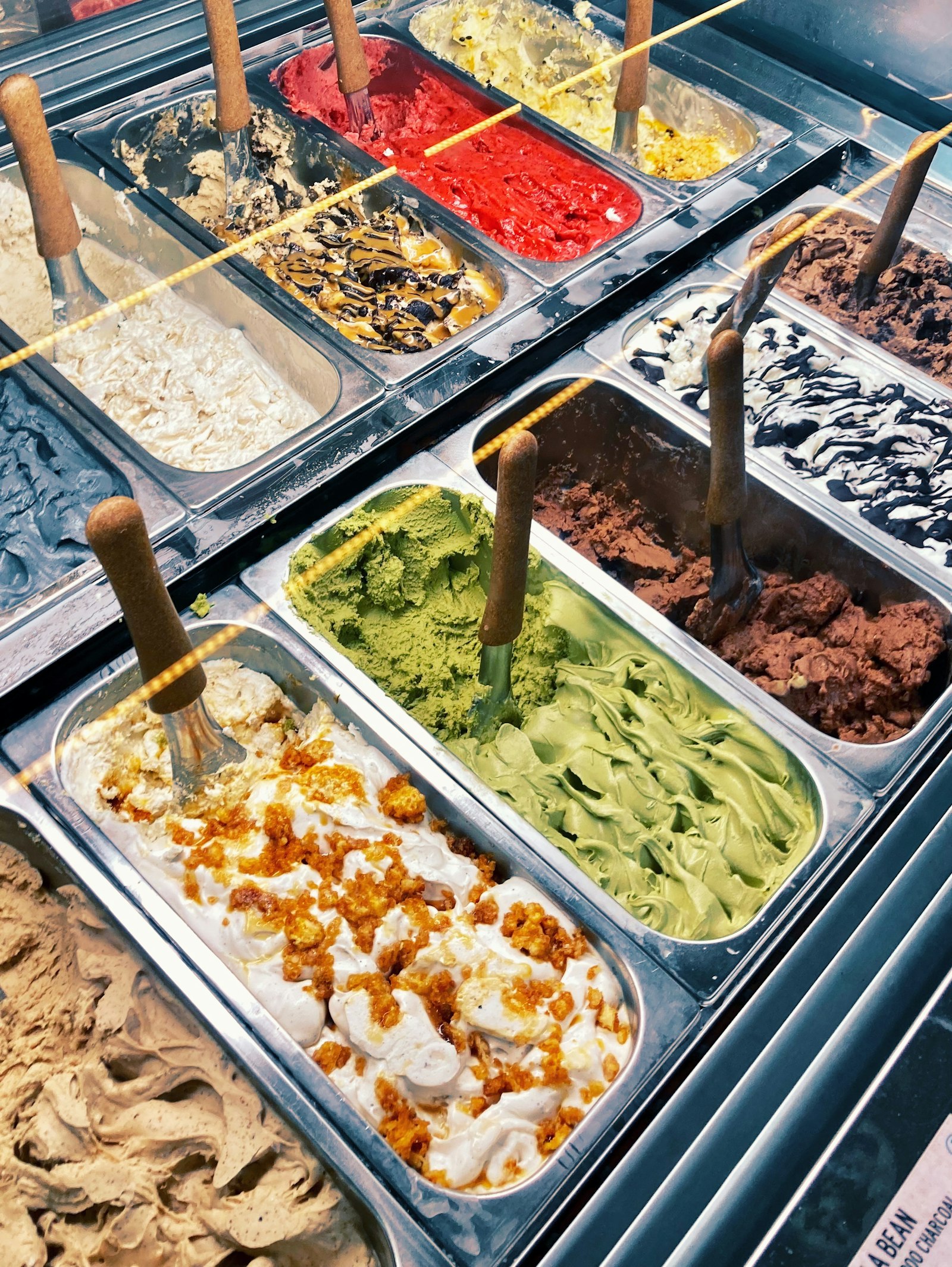
Do not divide the gelato counter into “fruit equals safe” and “creamy equals dairy.” Fruit sorbets are often made without milk, but recipes vary. Chocolate can be made with or without dairy. Nut flavors commonly contain milk, and cross-contact from shared scoops is possible.
Ask:
Quali gusti sono senza latte e derivati? Which flavors are without milk and milk derivatives?
If you have an allergy, follow with:
Usate le stesse palette per tutti i gusti? Do you use the same scoops for all the flavors?
Granita is traditionally based on water, sugar, and flavoring ingredients, especially in Sicily, but do not use tradition as an allergen guarantee. The accompanying brioche is a separate problem and can contain dairy.
If dietary restrictions are shaping where you stop during the day, it can help to organize the rest of your Italy trip around restaurants, supermarkets, transport, and sightseeing rather than discovering at 9:30 p.m. that your only nearby option is a cheese-heavy aperitivo buffet.
Breakfast pastries are where vegano can be especially useful
A plain-looking cornetto vuoto is not necessarily milk-free. Vuoto only means it has no filling. The pastry itself may contain butter, milk, or other dairy ingredients.
A pastry explicitly marked cornetto vegano is a much better clue that milk was not intentionally included in the recipe. For an allergy, still ask about the allergen information and shared bakery handling.
The same rule applies to cakes and biscuits. Senza crema means without cream or custard filling, not without dairy in the dough.
What to do when the wrong dish reaches the table
If you are lactose intolerant and grated cheese appears unexpectedly, what you do depends on your own tolerance and the actual ingredients in the dish. If you have a milk allergy, scraping cheese off the top is not the same as receiving a milk-free plate.
Tell the server immediately:
Mi dispiace, sono allergico/a al latte. Questo deve essere rifatto senza latte e derivati.
That means: “I’m sorry, I am allergic to milk. This needs to be remade without milk and milk derivatives.”
If the answer to an ingredient question is vague, such as “probably not” or “I don’t think so,” ask to see the written allergen information. For an allergy, uncertainty is a reason to choose another dish, not a reason to gamble on the kitchen’s memory.
Takeaway counters and delis deserve the same care. Even without a printed ingredient sticker on every tray of prepared food, regulated allergen information for non-prepacked foods still has to be available.
The five-second label check
When standing in a supermarket aisle or staring at an Italian menu, use the wording that matches the actual problem:
- Lactose intolerance: look for senza lattosio and check the stated lactose information.
- Milk allergy: check the mandatory milk allergen declaration, ingredient list, and any può contenere latte warning. Ask about cross-contact when food is prepared for you.
- Vegan diet: look for vegano or a clearly plant-based product, then check the ingredients if the label is unclear.
- Avoiding all dairy by choice: senza latte, vegano, and plant-based descriptions are useful; senza lattosio alone is not.
The shortcut to remember is simple: senza lattosio answers a lactose question; it does not answer a milk question.