The easiest way to order pizza al taglio in Italy is to point at the tray you want, indicate how wide a piece you would like, and let the person behind the counter cut it. If the pizza is sold by weight, they put your piece on a scale and the final price is calculated from its actual weight. You are not expected to know the weight before ordering. Showing the size with your hand and saying “così”, meaning “like this,” is completely normal.
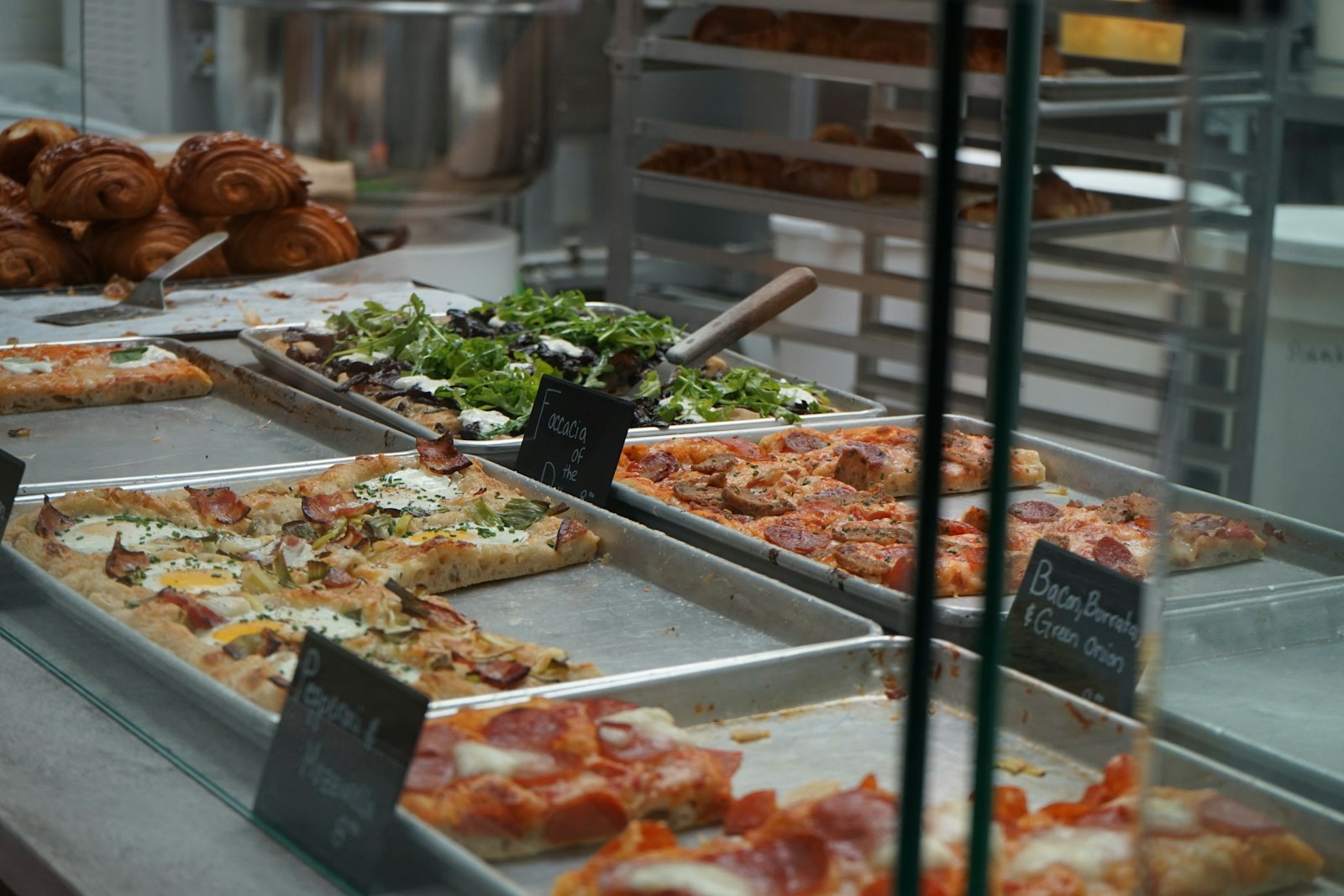
The important catch is that al taglio means “by the cut,” not necessarily “sold by weight.” Weight-based pricing is especially associated with Roman-style tray pizza, but some shops elsewhere charge a fixed price per piece. Check the price label before ordering.
How the counter usually works
A typical pizza al taglio shop has large rectangular trays behind a glass counter. Different toppings may have different prices. The basic sequence is:
- Wait for your turn. In busy shops you may need to take a numbered ticket marked numero.
- Point to the pizza you want.
- Show approximately how large a piece you would like.
- The staff member moves the knife or cutter to show where they intend to cut.
- Say “sì, così” if the size looks right, or ask for more or less.
- The piece is cut and, when pricing is by weight, placed on a scale.
- It may be reheated, folded, cut into smaller squares, or packed for takeaway.
- You either pay there or take a ticket to a separate cassa, depending on the shop.
You do not normally order “one slice” in the American sense because there may be no standard slice size at all. The customer effectively chooses the size.
Check whether the price is per kilo, per 100 grams, or per piece
Look closely at the labels beside each tray. Common wording includes:
- €24/kg or 24 € al kg: €24 per kilogram.
- al peso: sold by weight.
- al kg or al chilo: by the kilogram.
- €2,40/etto: €2.40 per 100 grams.
- al pezzo: sold at a fixed price per piece.
An etto, short for ettogrammo, is 100 grams. Due etti is 200 grams, tre etti is 300 grams. You do not need to use these measurements unless you want to be precise.
Remember that Italian prices use a comma as the decimal separator. A label reading 2,80 €/etto means €2.80 per 100 grams, not €2,800.
If unfamiliar menu terminology is slowing you down, the Italian menu translator explains other useful terms such as a peso, al kg, all’etto, and al pezzo.
The simplest way to choose your size
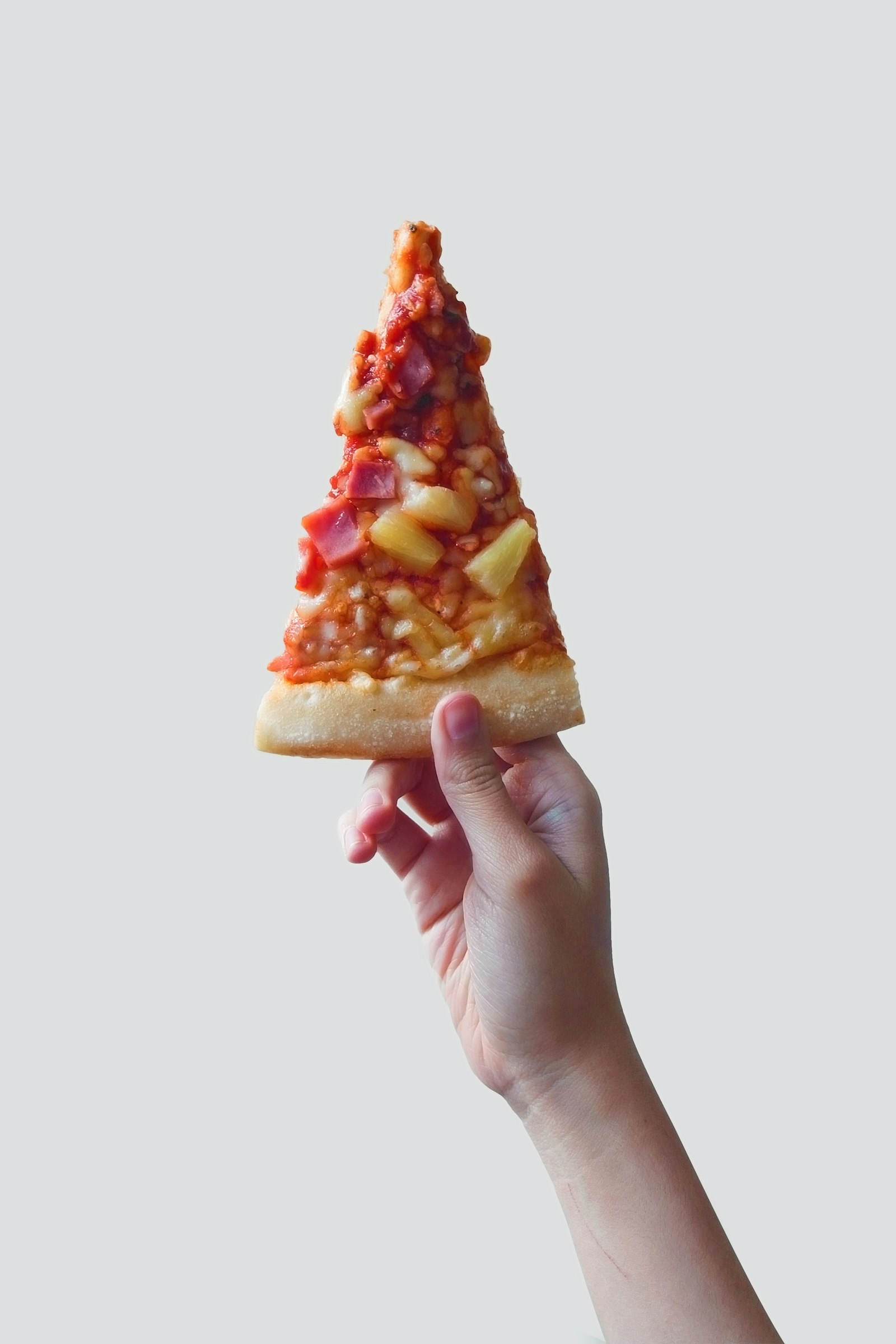
Do not try to calculate grams by looking at the tray. Dense toppings such as potatoes, cheese, sausage, vegetables, or stuffed combinations can make two equally wide pieces weigh very differently.
The easiest method is visual. Point to the pizza, then indicate a width with your fingers or hand. The server will often position the cutter and look at you for confirmation.
Useful phrases are:
- “Un pezzo di questa, per favore.” A piece of this one, please.
- “Così, grazie.” Like that, thanks.
- “Un po’ meno.” A little less.
- “Un po’ di più.” A little more.
- “Un pezzetto piccolo.” A small piece.
- “Ne vorrei circa due etti.” I would like about 200 grams.
If you want to sample several flavors, say “un pezzetto di questa e un pezzetto di quella”. Small pieces are perfectly normal at counters where customers build a mixed meal from several trays.
How the price is calculated
The mathematics is straightforward once the pizza reaches the scale. If a variety costs €20 per kilogram and your piece weighs 200 grams, it costs €4. At €30 per kilogram, the same 200 grams costs €6.
This is why the final amount may not be obvious while you are choosing. A richly topped pizza can cost noticeably more than a similar-looking piece of pizza rossa or pizza bianca, both because its price per kilogram may be higher and because the toppings add weight.
Different varieties can also have different kilogram prices. If you order several flavors, staff may weigh them separately rather than putting the entire order on the scale at once. Multiple weight or price lines on the receipt are therefore not automatically a duplicate charge.
You should be paying for the pizza, not the paper underneath it
For goods sold by weight, Italian rules require the sale to be based on net weight rather than including the tara, the wrapping or container used with the product. Italy’s Chambers of Commerce explain this requirement under Law 441/1981 in their guidance on sales by net weight and weighing instruments.
That does not mean the pizza must touch the bare scale. Shops commonly use paper, a tray, or another support. The scale can be zeroed or adjusted so that this packaging is not included in the charge. Commercial weighing instruments used to determine a customer’s price are also subject to legal metrology controls.
Where and when you pay varies by shop
Watch what the customers ahead of you do. There are several common systems.
At a small counter, the same person may cut, weigh, package, and charge you. In a larger bakery or busy Roman pizzeria, the food counter may give you a printed ticket and send you to a separate cashier marked cassa. Other shops have you pay first and then show the receipt at the pizza counter.
If you are unsure, simply ask:
“Pago qui?” means “Do I pay here?”
The answer may be “sì” or a gesture toward the cassa. Following the local flow is easier than trying to identify a universal system because there isn’t one.
Tell them if you are eating there or taking it away
A staff member may ask:
- “Qui o da portare via?” Here or takeaway?
- “Mangia qui?” Are you eating here?
- “Da asporto?” Takeaway?
Answer “qui” if you are eating there or “da portare via” if you want it packed.
Do not assume a pizza al taglio shop has restaurant-style seating. Some have tables, some have stools or standing counters, and others are essentially takeaway shops. This makes them useful between sightseeing stops, particularly when you are building a flexible day rather than reserving every meal. You can organize the rest of your Italy trip around the places and neighborhoods you plan to visit.
Ask for reheating if you want it hot
Some tray pizzas are kept at room temperature and reheated after you order. Others are meant to be eaten as they are, particularly if they have toppings added after baking.
If you want it warmed, ask:
“Me la scalda, per favore?” Could you heat it for me, please?
The staff may put the piece back into the oven briefly before cutting it into smaller eating-size sections. Do not be surprised if the large rectangle you selected comes back as two, four, or more smaller pieces.
What to do if the piece looks too big
The best moment to correct the size is while the cutter is still hovering over the tray. Say “un po’ meno” and indicate a smaller width. There is nothing rude about adjusting the cut.
If the piece has already been cut but has not yet been packed or finalized, you can say:
“È troppo. Posso prenderne meno?” That’s too much. Can I take less?
Whether it can easily be changed depends on how the shop handles food that has already been cut, so stopping the server before the cut is simpler.
Common mistakes that make the bill larger than expected
- Ignoring the unit price. Two pizzas beside each other may have very different prices per kilogram.
- Pointing vaguely. If the cutter indicates a size, look before automatically saying yes.
- Assuming the displayed number is the price of one slice. A sign reading “28 €/kg” is a rate, not the price of the piece in front of you.
- Forgetting how heavy toppings can be. Potato, cheese, meat, and heavily dressed vegetables increase the weight quickly.
- Ordering several large pieces before seeing the first one’s weight. If budget matters, order one flavor first, see its size and price, then decide how much more you want.
- Assuming every shop uses weight pricing. Check whether the label says al kg, all’etto, or al pezzo.
A useful ordering sequence when you do not speak much Italian
You can manage the entire transaction with pointing and a handful of words:
- Point: “Questa, per favore.”
- Watch where the cutter is placed.
- Confirm: “Sì, così.”
- For another flavor: “Anche un pezzetto di questa.”
- Choose takeaway or eat-in: “Da portare via” or “qui.”
- Ask where to pay if necessary: “Pago qui?”
The most useful habit is simply to watch the cutter before saying sì. At a true cut-to-size counter, that small moment is your portion control, your budget control, and your chance to make room for a second flavor.