Changing from a Frecciarossa or Italo train to Milan’s yellow M3 line at Rogoredo does not require a trip outside the station complex. Follow signs for M3 or Metropolitana from the railway platforms into the underpass, then pass through the metro ticket gates. For Duomo, Centrale and the city centre, take the train toward Comasina, not San Donato. A Milano Rogoredo transfer is compact, but allowing about 15 minutes from the train door to the metro platform gives you useful breathing room with luggage.
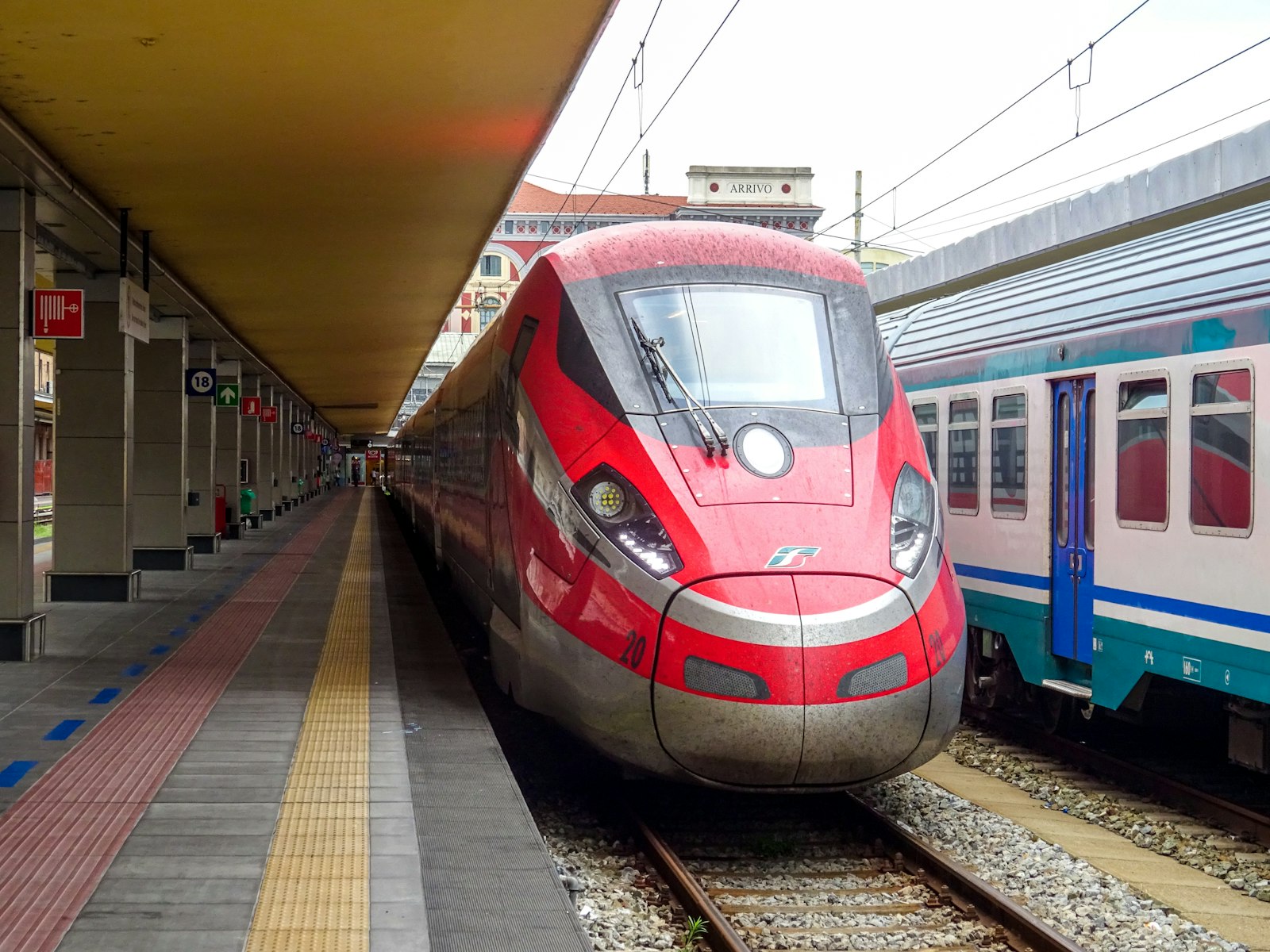
High-speed train to M3: the transfer step by step
- Get off your Frecciarossa or Italo train and check where you are. The platform display should say Milano Rogoredo. Do not follow passengers blindly toward the first street exit.
- Follow the metro signs. Look for the red metro symbol and signs marked M3, Metropolitana or Rogoredo FS M3. You will be directed from the railway platform into the pedestrian underpass.
- Continue toward the ATM metro area. The interchange connects with the M3 mezzanine, so there is no reason to haul your suitcase outside and search for another entrance.
- Buy or activate your metro fare before entering. Ticket machines are available in metro stations, or you can use a compatible contactless bank card or device directly at the gate.
- Choose the direction before descending to the metro platform. For central Milan, the destination displayed on the train and signs must be Comasina.
The important word is Comasina. Rogoredo sits near the southern end of M3, with San Donato one stop farther south. Boarding toward San Donato when you want central Milan is an easy mistake when you have just stepped off a long-distance train and are following the biggest crowd.
Which M3 direction do you need?
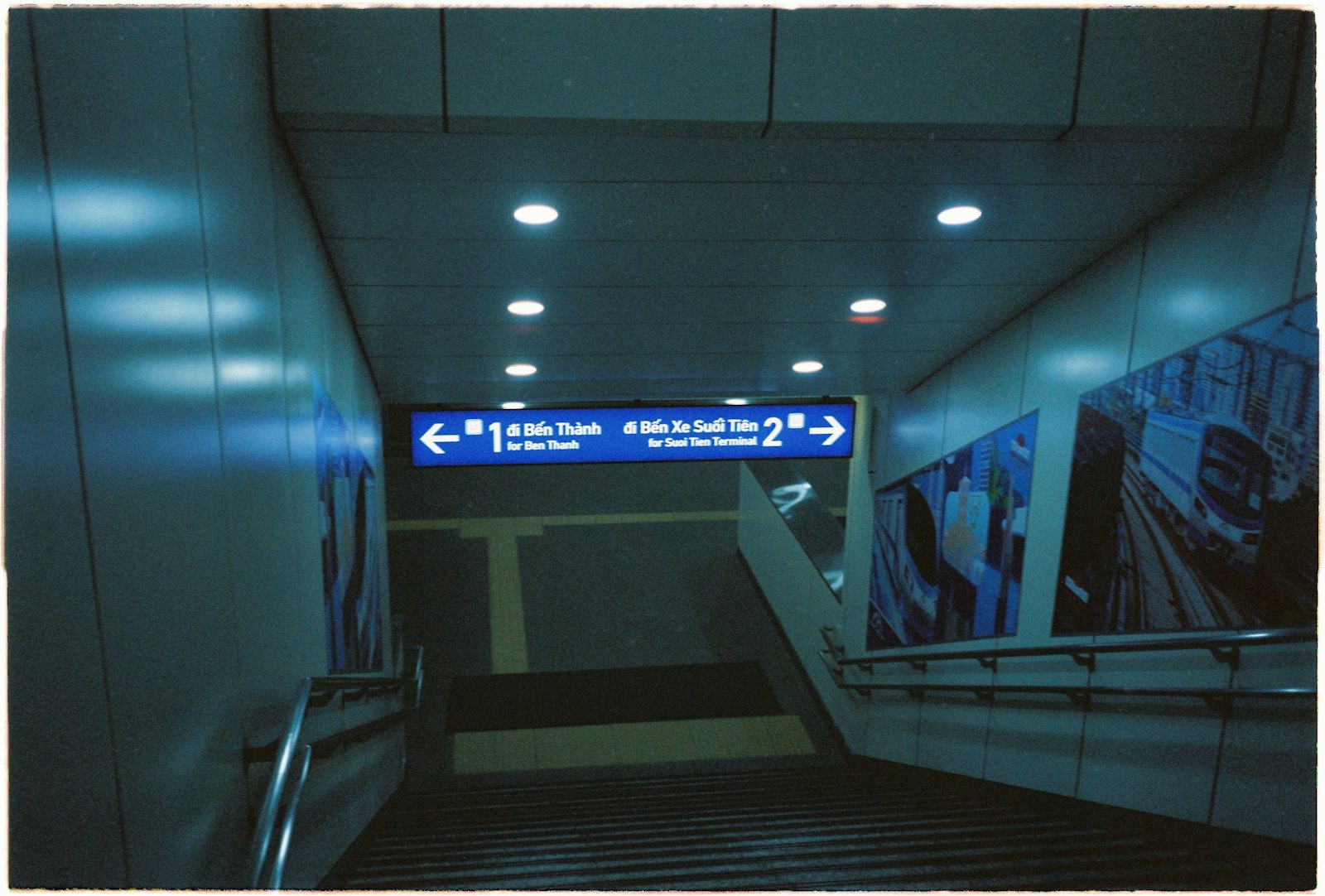
For almost every visitor arriving by high-speed train and continuing into Milan, choose M3 toward Comasina. The line runs directly through the centre without another metro change.
- Duomo: direction Comasina, eight stops from Rogoredo.
- Montenapoleone: direction Comasina, for the Quadrilatero fashion district.
- Repubblica: direction Comasina.
- Centrale FS: direction Comasina, 12 stops from Rogoredo and useful for connections at Milano Centrale.
- San Donato: use the opposite platform, direction San Donato.
The M3 platforms are for separate directions, so check the destination signs before making the final descent. If you are still getting familiar with Milan’s ticketing and interchange system, the Italy on Foot guide to getting around Milan by public transport explains how the metro, trams and urban fares fit together.
You need a separate metro fare
Your Frecciarossa or Italo reservation does not automatically function as an ATM metro ticket. Treat the high-speed journey and the M3 journey as separate transport products unless your particular booking explicitly states otherwise.
For travel within Milan, the standard Mi1-Mi3 ticket currently costs €2.20 and is valid for 90 minutes. ATM publishes current fares and validity rules on its official Milan ticket page.
Contactless payment is usually the quickest choice if you do not already have a ticket. Tap a bank card, phone or watch at the metro entrance and use the same card or device when exiting. One card or device can pay for only one passenger at a time. Do not tap in with the physical card and tap out with the same card stored in your phone wallet, because the system can read them as different payment credentials. ATM explains the procedure on its contactless payment page.
How much transfer time should you allow?
The interchange itself is not a cross-city expedition, but a realistic plan needs to include getting off the train, reaching the correct stairs or lift, walking through the underpass, dealing with the metro gates and descending to the correct M3 platform.
Allow about 15 minutes for a normal train-to-metro change. With a large suitcase, stroller, children or a lift requirement, 20 minutes is more comfortable. Those are planning buffers rather than scheduled interchange times. A quick walker with no luggage may need less, but there is little benefit in designing an itinerary that depends on winning a suitcase slalom.
The reverse connection deserves more margin. If you are taking M3 to Rogoredo for a reserved high-speed departure, aim to reach the metro station roughly 20 to 30 minutes before your train. That gives you time to reach the rail underpass, find the live departure board and move to the correct binario if the assignment is at the far end of the station.
M3 to a Frecciarossa or Italo train
From Duomo, Centrale or another central M3 stop, board a train toward San Donato. Get off at Rogoredo FS, which is the stop immediately before the San Donato terminus.
- Leave the metro platform following signs for FS, Treni or the railway symbol.
- Pass through the metro exit gates. Contactless users should tap out with the same card or device used to enter.
- Follow the connection into the railway underpass rather than going up to the street.
- Find an electronic Partenze board and match your train number, departure time and destination.
- Only then follow the sign for your binario.
Do not rely on an old platform number from a blog, screenshot or previous trip. Rogoredo handles high-speed, regional and suburban services, and platform assignments can change. If the display changes shortly before departure, the practical response is to match the train number and move promptly. The Italy on Foot guide to Italian train platform changes explains the signs and announcements to watch for.
Check that your high-speed ticket actually says Milano Rogoredo
Milano Rogoredo is a genuine high-speed stop used by both Frecciarossa and Italo, but not every high-speed train serving Milan stops here. Do not search only for “Milan” when checking your booking.
Look at the station printed on the reservation. Milano Centrale, Milano Rogoredo and Milano Porta Garibaldi are different railway stations. A reserved high-speed ticket is valid for its booked journey, train and route according to the operator’s fare conditions, so do not simply decide to board at Rogoredo because it is more convenient if your reservation starts somewhere else.
For the same reason, if you are arriving from Rome, Florence or Bologna, confirm that your particular train calls at Rogoredo before planning to get off there. RFI’s official Milano Rogoredo station page provides station information and current rail departure access.
High-speed tickets do not need metro-style validation
Do not waste transfer time hunting for a green or yellow validation machine for a Frecciarossa or Italo reservation. Trenitalia states that tickets for its national trains, including Frecciarossa, are valid for the booked train and do not require validation before departure. Italo high-speed tickets likewise do not require pre-boarding validation.
This is different from the ATM journey. For the metro you must have a valid fare and pass through the ticket gate correctly. The two systems happen to meet in the same station, but their ticket rules are separate.
Luggage, strollers and step-free access
A suitcase does not require a special M3 ticket, but it changes which route through the interchange is sensible. Follow lifts rather than dragging a heavy case up station stairs, and keep the bag in front of you through ticket gates so it does not get caught behind the closing barrier.
ATM lists Rogoredo FS M3 as accessible in both directions, with lifts between street/mezzanine level and the metro platforms. The step-free street access identified by ATM is on Via Cassinis. RFI also lists Milano Rogoredo as a station offering assistance for passengers with disabilities and reduced mobility.
Lift availability can change because of faults or maintenance. If step-free access is essential, check ATM’s live accessibility information and arrange RFI assistance in advance where appropriate instead of assuming every lift will be working when you arrive.
If you accidentally exit to the street
You have not ruined the connection. Look for the metro signs for Rogoredo FS M3 and re-enter the station rather than wandering farther into the neighborhood. The Via Cassinis side is a useful reference if you need the accessible entrance.
If your maps app appears to be sending you on a street walk between “Milano Rogoredo” and “Rogoredo FS,” stop and check the station signs first. The railway and metro are an interchange. A street-level detour is normally unnecessary for a train-to-M3 connection.
If you board M3 in the wrong direction
If you wanted central Milan but boarded toward San Donato, there is only one stop before the terminus. Get off at San Donato, follow the signs to the opposite direction and take an M3 train toward Comasina. It costs time, but it is a simple recovery.
If you realise the mistake while still at Rogoredo, do not try to improvise a crossing at track level. Return by the signed station route and use the correct platform.
Late-night arrivals at Rogoredo
Do not assume “the Milan metro runs until midnight” is precise enough for a late high-speed arrival. Last departures vary with the service calendar, summer timetables and special operating changes, so check the stop-specific ATM timetable on the day if your train reaches Rogoredo close to the end of metro service.
After normal M3 trains finish, ATM operates the NM3 night bus, which replaces the M3 corridor between San Donato and Comasina. If you need central Milan, use the service in the Comasina direction and verify the current street stop because temporary works can move bus stops. ATM maintains the current arrangement on its official night network page.
If your connection goes wrong
- Your high-speed train arrives late: the metro portion is flexible once you have a valid ATM fare, so simply take the next M3 service.
- You miss a high-speed departure: do not board the next Frecciarossa or Italo automatically. Change and missed-train rights depend on the operator and fare you purchased. Check the operator app or speak to its station staff first.
- The rail platform changes: trust the live Partenze board and train number rather than the platform saved in an old screenshot.
- A lift is unavailable: follow station accessibility signs and ask staff before trying to carry a wheelchair, stroller or very heavy suitcase on stairs.
- The M3 is disrupted: check ATM service information before leaving the railway area so you can decide between replacement transport, another rail connection or a taxi.
If Rogoredo is only one interchange in a longer Italian journey, it can help to build your Italy itinerary around the actual stations and transfers rather than treating every station with “Milano” in its name as interchangeable.
The simplest rule at Rogoredo is also the one most likely to save a tired traveler: high-speed train to central Milan means follow M3 signs, enter the metro, then choose Comasina. Going the other way, take M3 toward San Donato, get off at Rogoredo FS, follow FS/Treni, and check the live railway board before heading for a platform.