A private cicchetti tour in Venice usually involves walking between traditional wine bars, tasting small Venetian dishes, and learning how the city’s food and aperitivo culture works. Most experiences last around two to three hours, although the number of stops, included drinks, and amount of food vary considerably. Before booking, check exactly how many tastings are included, whether the tour replaces a meal, and which dietary requirements the participating bars can accommodate.
A Venice cicchetti food tour can be particularly useful for first-time visitors who want someone to organize the stops, explain unfamiliar dishes, and help with ordering. Private tours also allow more flexibility for families, different walking speeds, and personal food preferences. However, private does not automatically mean every menu, bar, or route can be customized.
What Happens on a Private Cicchetti Tour?
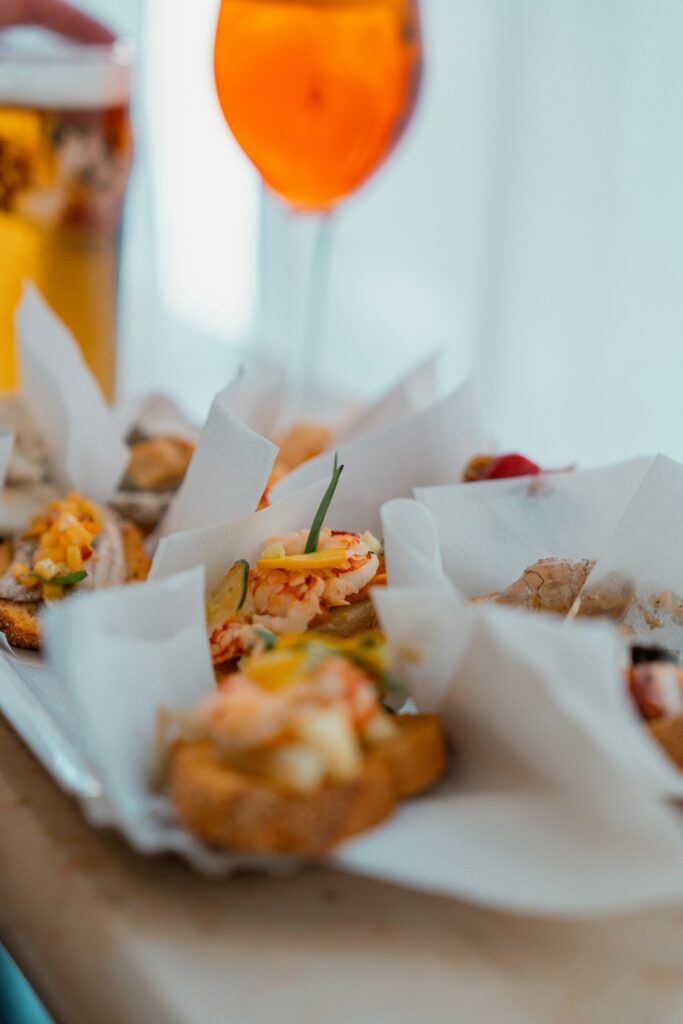
Cicchetti are small savory portions traditionally served in Venetian wine bars called bacari (singular: bacaro). They might be pieces of bread topped with seafood, meatballs, fried vegetables, small sandwiches, or individual portions of local specialties. Venetians often enjoy them with an ombra, a small glass of wine, or a spritz.
The traditional giro dei bacari involves visiting several bars rather than spending the entire evening in one restaurant. A guided experience follows a similar pattern, with a local guide choosing the route, explaining the food, and handling arrangements at each stop.
A typical private tour might look like this:
- Meet your guide. You gather at a specified square, landmark, or waterbus stop. Some private experiences offer hotel meet-up arrangements, but this should never be assumed.
- Visit the first bacaro. The guide introduces Venetian drinking and snacking traditions while you sample your first cicchetti.
- Walk through a neighborhood. Between tastings, the guide may explain local history, markets, architectural details, and everyday Venetian life.
- Continue to additional bars. You try different specialties, potentially paired with regional wines or non-alcoholic drinks.
- Finish at an agreed location. The tour may end in a different neighborhood from where it began, leaving you free to continue exploring or find somewhere for dinner.
Venetian bacari are often small, and standing at the counter is part of the traditional experience. Even with a private guide, you may encounter queues, limited seating, crowded entrances, and bars where a large group cannot comfortably stand together.
How Many Stops and Tastings Are Included?
There is no standard format for private food tours in Venice. Current offerings include two-hour walks with tastings at two bars, experiences with three cicchetti stops, and longer food walks incorporating markets, desserts, or substantial dishes.
The distinction between a stop and a tasting matters. A tour advertising six tastings could mean six individual bites across several locations, while another might serve larger portions at fewer stops.
Before choosing, clarify these details:
- Number of food stops: How many different establishments will you actually enter?
- Number of tastings: Are the quantities specified per person or shared by the group?
- Drinks: Are wine, spritz, water, and non-alcoholic alternatives included?
- Food quantity: Is the experience designed as an aperitivo, a substantial snack, or a replacement for lunch or dinner?
- Additional experiences: Does the itinerary include a market visit, a short canal crossing, a seated meal, or a dessert?
For a two-hour outing with just a few small bites, eating a proper meal beforehand or afterward may still be necessary. A longer food-focused tour with generous portions might replace a meal, but the booking description should make that clear.
Also check whether tastings are individually selected or served as a fixed assortment. Some operators can substitute dishes, while others work with predetermined menus agreed upon with participating bars.
Which Venetian Foods Might You Taste?
A good introduction to cicchetti includes different ingredients and preparations, ideally showing how Venice’s maritime history influenced its food. Seafood is prominent, although many bars also serve meat, cheese, eggs, and vegetables.
Baccalà mantecato
One of Venice’s signature specialties, baccalà mantecato is dried cod prepared into a creamy spread, commonly served over bread or polenta. Despite its creamy texture, traditional versions may obtain that consistency from oil rather than dairy, although recipes vary.
It contains fish and should never be assumed suitable for someone avoiding dairy without checking the actual preparation.
Sarde in saor
These are sardines prepared with sweet-and-sour onions, usually involving vinegar and sometimes raisins and pine nuts. The dish reflects historic Venetian preservation techniques.
It contains fish, and travelers with tree-nut allergies should ask specifically about pine nuts and kitchen handling.
Polpette
Venetian meatballs may be made with beef, other meats, fish, or vegetables. Ingredients vary between establishments, and breadcrumbs, eggs, cheese, or other binding ingredients may be used.
A vegetable polpetta should not automatically be assumed vegan or gluten-free.
Mozzarella in carrozza
This fried cheese sandwich typically contains mozzarella between slices of bread, often coated before frying. Venetian variations may also include anchovies or ham.
Wheat, milk, and potentially eggs or fish are relevant allergens. Shared frying oil may create additional problems for some visitors.
Tramezzini and seasonal vegetables
Tramezzini are soft, crustless sandwiches filled with combinations such as tuna, eggs, vegetables, cheese, or cured meats. Other counters offer artichokes, grilled vegetables, polenta, and seasonal preparations.
Availability changes throughout the day, and the freshest selection may differ from one visit to the next. For a broader explanation of traditional dishes, see what foods Venice is known for.
Which Neighborhoods Are Commonly Included?
A private tour normally concentrates on one or two neighboring districts rather than covering the whole historic city. Shorter distances allow more time for eating and conversation instead of repeatedly crossing Venice.
Rialto and San Polo
The area around Rialto has a long connection with markets, merchants, and wine bars. Routes through San Polo often combine traditional food stops with explanations of the commercial history of Venice.
Some morning experiences include the Rialto market area. However, seeing the market buildings and visiting while traders are operating are different experiences. Fish and produce trading is mainly a morning activity, with schedules varying by market section and day.
If an operator advertises a Rialto Market visit, ask whether the stalls will actually be operating at your tour time. An evening walk through the market area does not offer the same experience as a morning visit.
Cannaregio
Cannaregio offers popular stretches of canal-side wine bars, especially around Fondamenta della Misericordia and Fondamenta dei Ormesini.
This district can work well for an aperitivo-focused tour with several relatively nearby stops. Routes may include quieter residential streets and small squares away from the busiest routes between San Marco and Rialto.
Dorsoduro
Dorsoduro has traditional wine bars, student-oriented meeting places, and streets around Campo Santa Margherita where food and drink are part of everyday neighborhood life.
It can suit travelers interested in combining tastings with a relaxed walk, although the exact atmosphere depends on the time of day and chosen establishments.
No neighborhood guarantees an uncrowded experience. A small, popular bacaro may become busy even when the surrounding streets are relatively quiet.
Private Tour or Small-Group Tour: Which Should You Choose?
Private food experiences are most useful when the flexibility matters to your group. A couple wanting a guided introduction without any special requirements may be perfectly comfortable on a small-group tour.
Consider a private arrangement when:
- Your party includes several people with different dietary needs.
- You are traveling with young children who require a slower pace or earlier start.
- Someone has limited stamina and needs regular breaks.
- You prefer asking detailed questions about food and local customs.
- You want an itinerary centered on particular ingredients or neighborhoods.
- You are celebrating an occasion and would prefer to keep your group together.
However, confirm what the word private means in the booking. Usually it means that the guide works exclusively with your party. It does not mean the bars are reserved exclusively for you or that other customers will be absent.
Ask whether your group will have a dedicated guide throughout, whether the itinerary can change, and whether there are any limits on the size of your party.
Dietary Requirements: What to Ask Before Booking
Dietary suitability deserves particular attention on cicchetti tours because many dishes are prepared in advance and displayed at a counter. A guide may know which bars usually offer alternatives, but the individual food business remains responsible for providing accurate ingredient and allergen information.
Under EU food-information rules, businesses serving non-prepacked food must provide information about the presence of specified allergens. You can read the relevant requirements on the European Commission’s food-information page.
That requirement does not mean every bar can prepare an allergen-free meal or prevent cross-contact in a shared kitchen.
Vegetarian visitors
Vegetarian options can include cheese-based cicchetti, egg preparations, vegetables, and certain polpette. Availability depends on the establishments and what they have prepared that day.
Ask whether the planned stops can provide a reasonable variety of vegetarian dishes rather than repeating bread and cheese at every location. Specify whether you eat eggs and dairy, and whether fish or anchovies must be excluded.
Vegan visitors
Vegan requirements are more restrictive. Vegetable toppings may contain cheese, butter, eggs, mayonnaise, or other animal-derived ingredients. Even apparently simple fried vegetables may be prepared using shared equipment.
A private itinerary may be adaptable, but some traditional bacari cannot provide enough suitable food for a full tasting experience.
Before paying, request examples of the vegan dishes the operator expects to serve and ask what happens if a planned option is unavailable.
Gluten-free and coeliac requirements
Many cicchetti are served on ordinary wheat bread, while fried foods may be coated with flour or breadcrumbs. Polenta can provide a naturally gluten-free base when made from suitable ingredients, although toppings and preparation methods still require checking.
For someone with coeliac disease, ingredient substitutions alone may be insufficient. Ask about separate preparation areas, utensils, storage, and shared frying oil.
Some operators advertise gluten-free accommodations but cannot guarantee them at every stop. Others explicitly state that gluten-free requirements cannot be supported. Confirm the position of your particular operator and the participating establishments before booking.
Fish, shellfish, nuts and other allergies
Venetian cuisine frequently includes fish, molluscs, crustaceans, and ingredients that may not be immediately visible. Seafood counters can also involve shared utensils and preparation surfaces.
Travelers with food allergies should provide the exact allergen names rather than using broad descriptions such as “seafood allergy.” For example, specify whether the allergy involves fish, crustaceans, molluscs, or several categories.
Likewise, identify individual nuts, milk, eggs, sesame, soy, or other relevant allergens. Wine may also contain sulphites, which can matter for people with sensitivities.
For serious allergies, ask whether each participating establishment can assess cross-contact risk and whether the tour can provide a safe alternative. If the answers are uncertain, a conventional cicchetti crawl may be unsuitable. A carefully selected sit-down restaurant with appropriate food preparation may be a more practical option.
A useful dietary enquiry
Send the operator a specific message before booking:
“We are interested in a private cicchetti tour for four people. One guest is vegetarian, and another has coeliac disease and must avoid gluten cross-contact. Can all planned food stops accommodate these requirements? What dishes would be provided, and are preparation procedures suitable? Please confirm before we book.”
If the tour cannot meet a particular requirement, ask whether that participant can join without eating, whether suitable alternatives can be arranged, and whether the price changes.
Meeting Points, Walking Distances and Accessibility
Venice meeting points require more care than they might in cities with conventional street layouts. Tours frequently begin in a campo (square), beside a church, near a bridge, or at a specific vaporetto (waterbus) stop.
Some locations have similar names, and Venice’s six districts use their own civic-numbering systems. A meeting point described only as “near Rialto” may be too vague, particularly for a first-time visitor.
Request the exact meeting location, preferably with a map pin and a physical landmark. The confirmation should also say whether your guide will carry a sign or contact you by phone.
Hotel pickup needs special confirmation. It may mean that the guide meets you in your hotel’s lobby and walks with you to the first stop. It generally does not imply a private water taxi or transportation from Mestre, the airport, or the cruise terminal.
How much walking is involved?
A two-hour tour may cover a relatively small geographic area, but the walk can include narrow streets, uneven paving, steps, and bridges. Much of the time may also be spent standing at counters.
Before booking, ask:
- What is the approximate walking distance?
- How many bridges and flights of steps are involved?
- Can the itinerary include seated stops?
- Are there accessible toilets along the route?
- Can the starting and finishing points be adjusted?
Wheelchair accessibility should be verified for every planned stop, including entrances, toilets, and routes between establishments. The city’s official Accessible Venice information explains accessible routes and bridge barriers, which can help when discussing adaptations with a guide.
A private guide may be able to change the route, but cannot remove physical barriers at individual establishments.
Are Cicchetti Tours Suitable for Children?
Families can enjoy food walks, particularly if children like trying different snacks. However, a traditional aperitivo route may not suit every age group.
Bars can be crowded, seating may be limited, and some itineraries focus heavily on wine tasting. Ask whether the guide can arrange food-focused stops, a child-friendly starting time, and suitable non-alcoholic drinks.
Parents should also check whether children’s prices include the same food quantities as adult tickets, whether infants can join, and whether strollers can be used along the entire route.
For younger children, a shorter private tour with fewer bars and more substantial food can be easier than a long evening experience.
What Is Included in the Price?
Private food tours are priced differently depending on duration, party size, number of tastings, and additional experiences. Some charge per person, while others quote a total price for the private group.
Do not compare two tours based only on their advertised starting price. One might include multiple drinks and substantial portions, while another covers the guide and a smaller aperitivo selection.
Before paying, obtain written confirmation of:
- The total price for your exact party size, including applicable taxes and booking fees.
- The number of food and drink tastings included per person.
- Any additional charges for children or dietary substitutions.
- Whether extra food and drinks are paid for individually.
- Whether a market visit, water crossing, or other activity is included.
- Whether a deposit is required and when the remaining balance is due.
- The cancellation deadline, refund conditions, and any rescheduling rules.
- Whether gratuities are included or optional.
If the tour includes a gondola-related experience, clarify whether it is a brief traghetto crossing or a longer sightseeing gondola ride. These are different services and should not be treated as interchangeable.
For a group of several people, compare the full private price against the total cost of joining a small-group experience. The difference may be smaller than it first appears, especially when the private rate is shared across the group.
Morning, Lunchtime or Evening: When Should You Go?
The right time depends on what you want to experience.
Late morning can work well when the itinerary includes the Rialto market or a food-focused walk that finishes around lunchtime. However, market traders’ schedules and the opening hours of individual bars must be checked.
Early afternoon can be less convenient because some traditional establishments close between lunch and the evening aperitivo period. A tour operator should confirm that the proposed stops will be open.
Early evening generally suits visitors interested in the aperitivo atmosphere, with wine, cicchetti, and people gathering at neighborhood bars. It may also be busier, especially on weekends.
During hotter months, a later walk may be more comfortable. In autumn and winter, an earlier time can appeal to travelers who prefer exploring before dark.
For trip planning beyond the food experience, the Italy on Foot trip planner can help organize your itinerary around other activities and the time you have available in Venice.
Rain, High Water and Last-Minute Changes
Most cicchetti tours involve outdoor walking between indoor establishments, so ordinary rain does not necessarily prevent the experience from operating. Venice’s narrow streets can become slippery, and windy or wet weather makes umbrellas more awkward in busy pedestrian areas.
Ask whether your tour normally continues in rain and what happens if severe weather affects the planned route.
Exceptionally high tides, known as acqua alta, can affect access to parts of Venice. The impact varies by location and water level, so conditions may require a different route, delayed start, or other arrangements.
A private experience may offer more flexibility, but refunds or rescheduling still depend on the agreed booking conditions.
Distinguish between three situations: the provider cancels, you decide not to attend because of the forecast, or the experience operates with modified stops. These circumstances may have different refund rules.
Before booking, check the weather policy rather than assuming that rain automatically entitles you to a refund.
How Far Ahead Should You Book?
Booking ahead is sensible when you require a particular language, an unusual starting time, specific dietary arrangements, or a private experience for a larger group.
There is no universal minimum booking period. Availability depends on the guide’s schedule, participating bars, and the season. Some arrangements may be possible at short notice, while customized itineraries require additional coordination.
For travel in 2027, confirm the operator’s actual calendar and terms for your dates. A tour advertised today may have different stops, prices, or inclusions in a later season.
Apart from reserving the experience, leave enough time between other commitments. Do not schedule a food tour immediately after your expected train arrival or just before a non-refundable attraction entry.
Train delays, longer-than-expected transfers, or difficulty finding the meeting point can quickly consume the available time.
Common Booking Mistakes to Avoid
- Assuming every private tour is fully customizable. Ask which parts of the itinerary can actually change.
- Confusing tastings with full dishes. Find out how much food is served before planning the rest of your meals.
- Reporting allergies only on arrival. The guide may not be able to arrange suitable alternatives at that point.
- Assuming hotel pickup includes transportation. Confirm whether pickup means meeting on foot.
- Booking a market itinerary in the evening. The market area may still be visited, but the stalls will not necessarily be operating.
- Overlooking standing time. A short walking distance does not guarantee an easy experience for someone who struggles to stand.
- Bringing large luggage. Small bars generally have limited space, and luggage handling is rarely part of a standard food tour.
- Ignoring the finishing location. The experience may end some distance from your hotel or next activity.
What If the Guide Is Late or a Planned Bar Is Closed?
Your confirmation should provide an emergency contact number and instructions for delays. If the guide does not appear, check that you are at the exact meeting point, including the correct side of any bridge or square, and contact the operator through the specified channel.
Keep a record of your messages and the time you arrived. Avoid leaving immediately without attempting contact, unless safety or another urgent circumstance requires it.
Occasionally, a planned bacaro may be closed unexpectedly, crowded, or unable to serve a particular dish. A guide may substitute another establishment or tasting, but the replacement should be reasonably consistent with what you purchased.
If a major advertised inclusion is unavailable, ask how the operator intends to address the change. Check the booking terms and request written confirmation of any agreed partial refund, replacement, or rescheduled experience.
Can You Visit Venetian Bacari Without Booking a Tour?
Yes. You do not need a guide or an organized experience to enjoy cicchetti in Venice. Many bars serve individual pieces directly from the counter, allowing visitors to explore at their own pace.
A simple independent outing involves choosing a neighborhood with several nearby bacari, ordering a couple of small dishes and a drink, and continuing to the next establishment when you are ready.
A few useful Italian expressions include:
- Un cicchetto, per favore. One cicchetto, please.
- Due cicchetti. Two cicchetti.
- Un’ombra di bianco. A small glass of white wine.
- Cosa contiene? What does it contain?
- Sono vegetariano/a. I am vegetarian.
- Senza glutine. Gluten-free.
- Ho un’allergia alimentare. I have a food allergy.
For food allergies, provide the precise ingredients you must avoid and communicate the seriousness of the restriction. A short phrase or translation card is helpful, but does not replace confirmation that the kitchen can prepare suitable food safely.
An independent visit is often sufficient for travelers who enjoy choosing their own food and exploring without a schedule. A private guided tour becomes more useful when you want explanations, a carefully arranged tasting sequence, or help coordinating the practical details for your group.
Whichever option you choose, settle three things before committing to a paid experience: exactly what you will eat and drink, whether the planned establishments can meet your group’s needs, and where the guide will meet you. Those details will tell you much more about the suitability of a tour than the number of attractions mentioned in its description.